
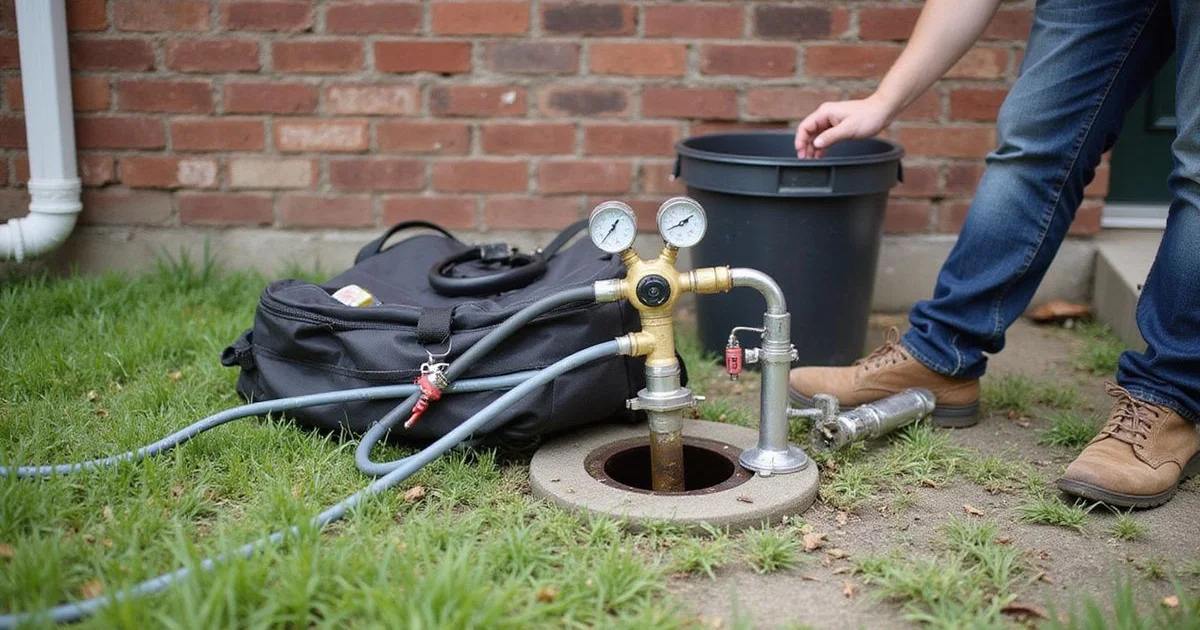
Why a plumbing test belongs before, not after, any slab foundation repair work.
The problem in one paragraph
A supply or drain line running beneath a slab foundation that develops a leak introduces water into the ground continuously, invisibly, and in one location. In soil that changes volume with moisture, that produces swelling in a localised area — which pushes upward on the slab above it.
The result looks like foundation movement, because it is foundation movement. The cause, though, is a plumbing failure, and a repair scope that does not address it is treating the symptom while the mechanism keeps running.
Why this specifically matters before a lift
There are two separate arguments for testing the plumbing before any structural work.
The diagnostic argument. If a leak is causing the movement, the correct sequence is to fix the leak, allow the soil to stabilize, re-survey, and then decide what structural work if any is warranted. Underpinning first means installing supports around a mechanism that is still active.
The mechanical argument. Lifting a slab moves the concrete relative to everything passing through and beneath it. Pipes that were intact but aged can fail under that movement. Discovering this after a lift means opening completed work, and disputes about causation are unpleasant for everyone. Knowing the plumbing condition beforehand removes that ambiguity.
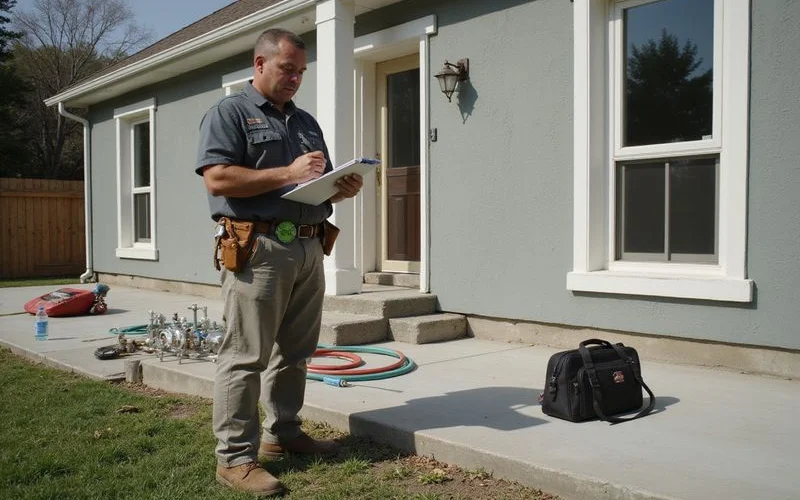
What the tests actually do
Hydrostatic test (drain lines). The plumber isolates the under-slab drainage system, typically by setting a plug at a cleanout, fills the system with water, and observes whether the static level holds over a defined period. A drop indicates a leak in the tested section. It is a pass/fail on the section, not a location.
Supply line pressure test. Supply lines are under pressure in normal use, so they are tested by isolating and pressurising, then watching for pressure loss. Again, a result rather than a location.
Leak location. Where a test fails, locating the leak precisely is a further step — video inspection of drain lines, acoustic or thermal methods for supply lines, or in some cases exploratory access.
None of these is a foundation service, which is worth saying plainly: they are plumbing work, performed by a licensed plumber, and documented by them.
What happens if a leak is found
The sequence matters more than the individual steps.
| Step | Why it comes here |
|---|---|
| Locate the leak | You cannot repair what you have not found |
| Repair it | Removes the moisture source driving the movement |
| Allow time | Soil takes time to release moisture and return toward its prior volume |
| Re-survey elevations | The floor plane may have changed materially after the source is removed |
| Reassess scope | Structural work, if any, is scoped against the new picture |
Skipping the waiting period is understandable and usually a mistake. Soil does not respond instantly, and a structural scope written the week after a leak repair may be describing a condition that partially resolves on its own.
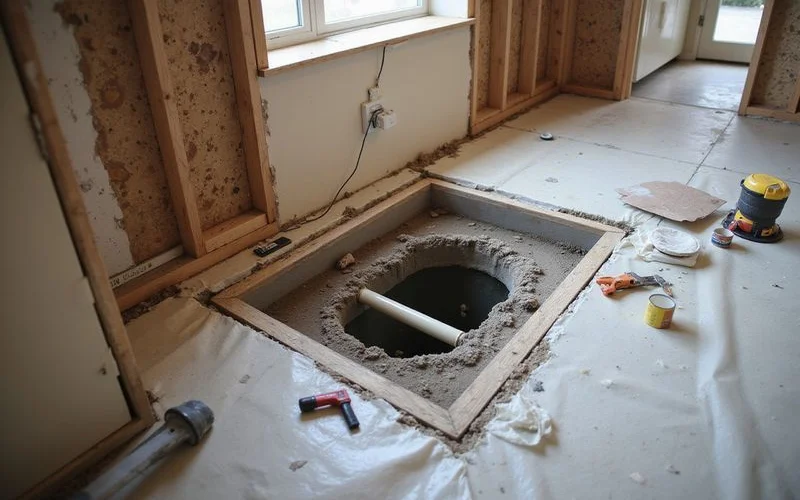
Access options for the repair itself
Repairing an under-slab line requires reaching it. Broadly there are two routes.
Interior access means opening flooring, cutting through the slab, doing the work, and restoring. It is direct and it is disruptive — flooring, dust, and a restoration scope of its own.
Tunnelling means excavating from outside the house and working under the slab to reach the line, leaving interior floors intact. It avoids the interior disruption and costs more in excavation and restoration. The under-slab tunneling guide covers when each makes sense.
The right choice depends on depth, distance from the perimeter, soil conditions, access around the house, and what the interior finishes are.
How this coordinates with an evaluation
A good evaluation flags the possibility rather than ignoring it. If the elevation pattern shows a localised high area with no external moisture source to explain it, that is a reason to ask about the plumbing before proposing piers.
When we see that pattern, we say so and recommend testing. It is the sort of recommendation that can cost us the structural job, which is precisely why it is worth checking whether the company assessing your foundation is willing to make it.
For the broader diagnostic picture, read heave versus settlement. For what structural work involves if it turns out to be warranted, see slab foundation repair.