Observation is not diagnosis
This is the principle that organizes everything below, so it goes first.
An observation is something you can see or feel: a crack above the front window, a door that catches, a floor that seems to fall toward the kitchen. Observations are facts. You do not need anyone’s permission to make them and they do not require interpretation to be real.
A diagnosis is a conclusion about cause and significance: the foundation has settled at the northeast corner by roughly an inch, consistent with soil shrinkage beneath the grade beam. That requires measurement, context, and judgement. Nothing on this page decides whether you need foundation repair in Fort Worth — it helps you describe what you are seeing accurately.
Mistaking the first for the second is how people end up with repair scopes they did not need. It is also how some providers sell them. A photograph of a crack cannot establish cause, severity, or scope, and anyone quoting a pier count from one is guessing in their own favor.
The four observations we are asked about most
Brick and mortar cracks
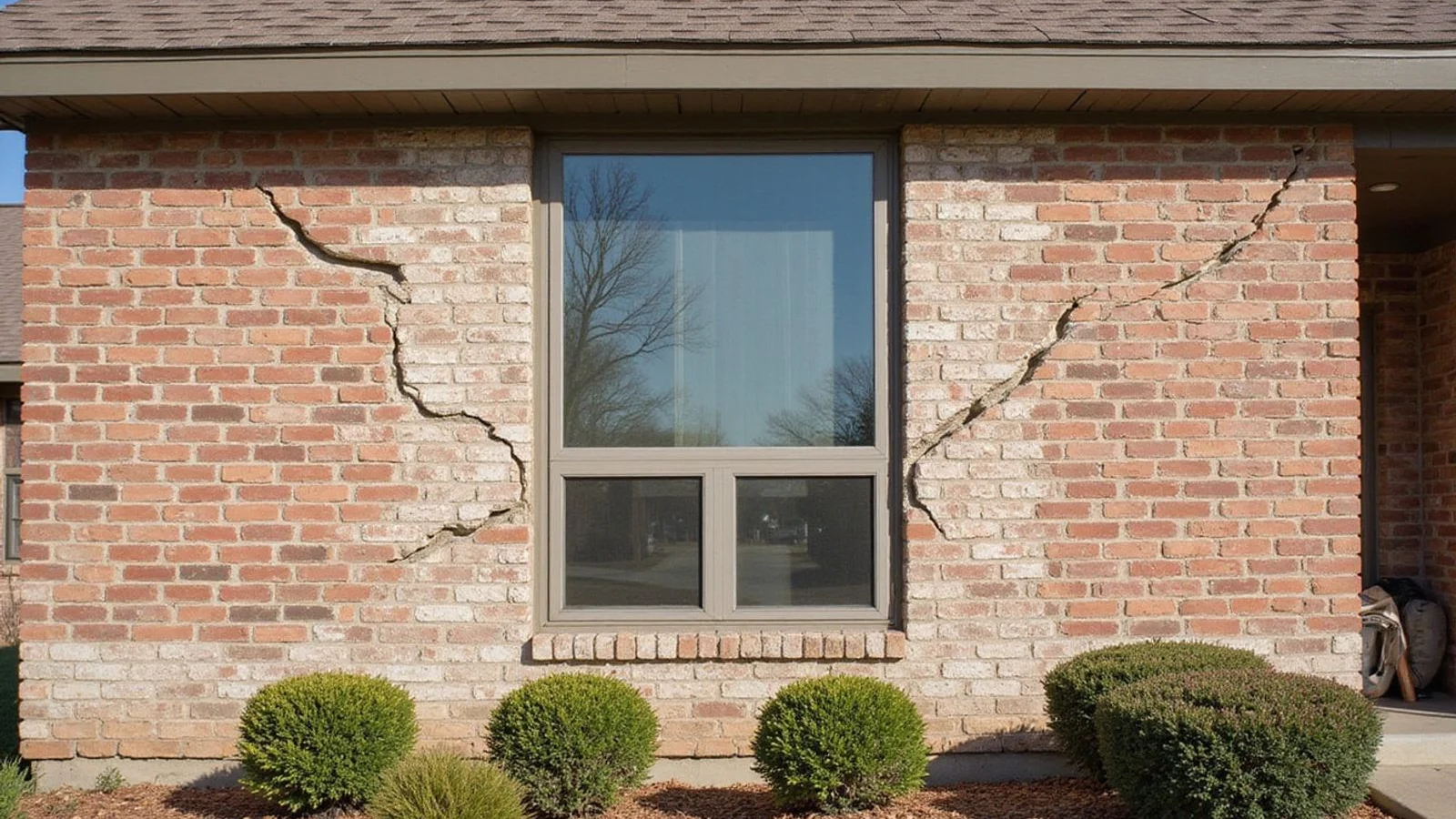
Stair-step cracking that follows the mortar joints, usually radiating from a window or door opening, is the classic exterior observation. It is worth documenting and worth watching. It is also common in houses that turn out not to need structural work, because brick veneer is a cladding that responds to thermal and moisture movement as well as to foundation movement.
What matters: location relative to openings and corners, whether the crack is wider at the top or bottom, whether it corresponds to anything inside the house, and whether it has changed. See brick and mortar cracks.
Interior wall cracks
Diagonal cracks from the corners of door and window openings, cracks at wall-ceiling junctions, and cracks that reopen after patching. Interior finishes crack for many reasons, and the majority of the interior cracking in a typical house is cosmetic.
What matters: the direction, whether it corresponds to exterior observations in the same area, and whether patching it holds. See interior wall cracks.
Sticking doors and windows
Doors that bind on one edge, windows that stop closing properly, latches that no longer line up. These are useful indicators because door frames are sensitive to small geometric changes.
They are also sensitive to humidity, which is why a door that sticks in a wet spell and frees up later is probably telling you about the weather. Multiple doors affected on the same side of the house, persisting across seasons, is a different signal. See sticking doors and windows.
Uneven or sloping floors
Floors that feel like they fall in one direction, or that have a noticeable dip in one area. In a slab home this usually relates to slab movement; in a pier-and-beam home it can be the supports or the framing, and those need distinguishing.
Some slope exists in almost every house. The question is magnitude, distribution, and whether it is changing. See uneven or sloping floors.
Other things worth noticing
Gaps opening between trim or baseboards and the wall. A porch, step, or addition separating from the main structure. Cracked floor tile in a line rather than a random spot. Soil pulling away from the slab edge in a dry spell. Recurring cracks in the same place after patching. Water pooling against the foundation after rain.
None of these on its own establishes anything. Several of them together, in the same part of the house, changing over time, is a picture worth having someone measure.
What to do before you call anyone
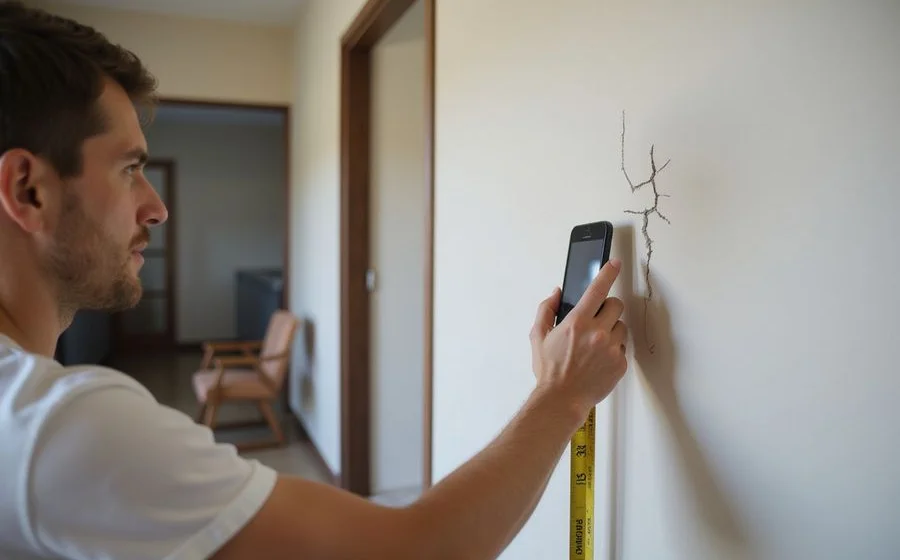
Document it properly. Photograph each observation wide and close, with something for scale — a crack gauge if you have one, a coin or a tape measure if you do not — and record the date. Mark the end of a crack in pencil and date the mark so you can see whether it grows, since differential movement between two dated readings is stronger evidence than any single observation. Note which doors are affected and which edge binds.
Then check the cheap explanations. Is a downspout discharging right at the foundation? Is an irrigation zone soaking one corner? Has a large tree gone in near the house recently, or has one come out? Some of these you can address yourself for very little.
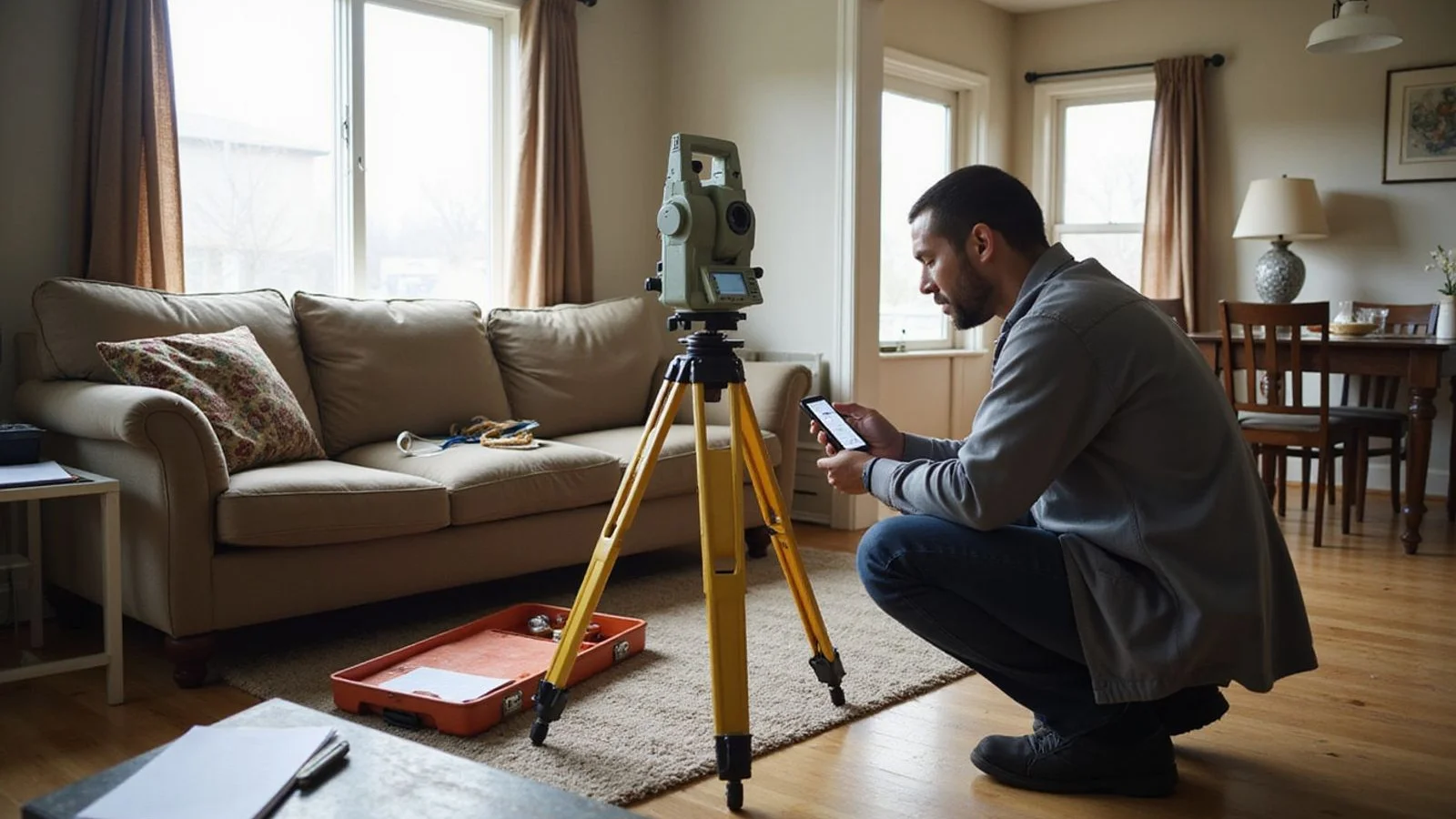
If it is changing, if it is affecting how the house functions, or if you need it settled for a transaction, that is when a foundation evaluation earns its keep — because the elevation survey is the thing that turns observations into evidence.