
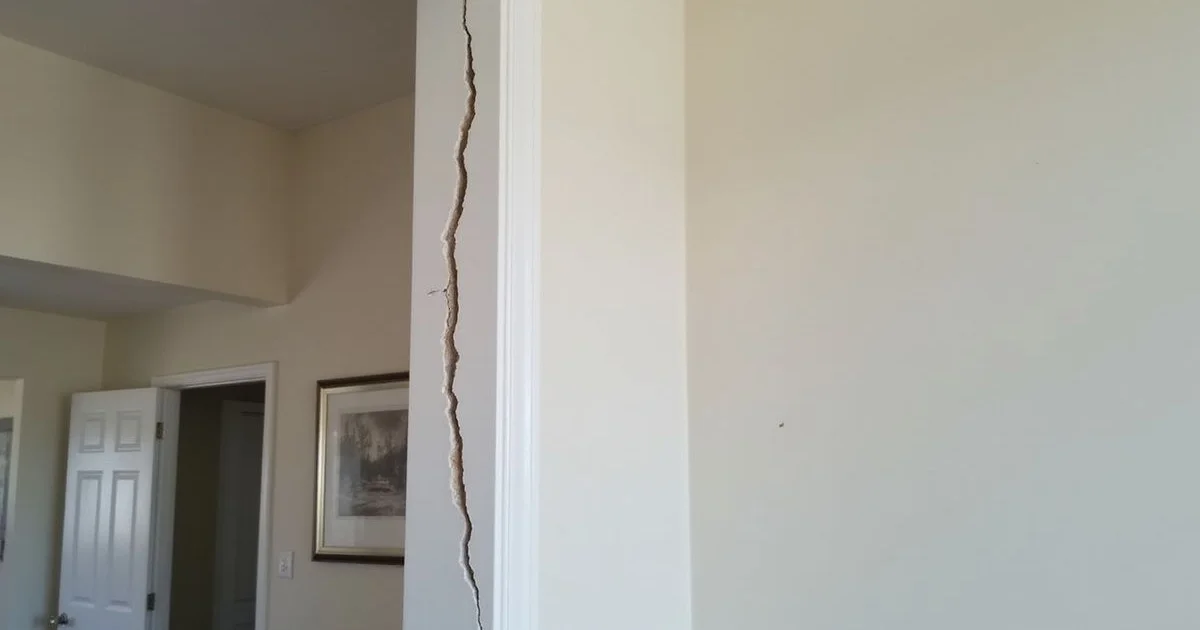
Part of the common foundation concerns family, covering the cracks people find inside the house.
Most interior cracks are not about the foundation
That is worth saying first, because plenty of content on this subject is designed to produce the opposite impression.
Drywall and plaster crack for ordinary reasons. New construction shrinks as it dries out. Timber framing moves with seasonal humidity. Thermal cycling works on joints. Tape fails. Finishes that were installed over a weekend twenty years ago have been quietly moving ever since.
The question is not whether you have interior cracks. Almost every house does. The question is whether the ones you have form a pattern consistent with structural movement.
The locations that carry information
Diagonal cracks from the corners of door and window openings. Openings interrupt the wall and concentrate stress at their corners. This is the pattern most worth noting.
Cracks that correspond to exterior observations. A crack inside the house in the same area as a stair-step crack in the brick outside is a more coherent picture than either on its own.
Cracks in line with a floor slope or a binding door. Several observations pointing at the same part of the house.
Cracks where the surfaces are displaced. Where one side of the crack has moved out of plane with the other, rather than simply parting. That indicates something more than surface movement.
Recurring cracks. Reopening after patching, which is covered below.
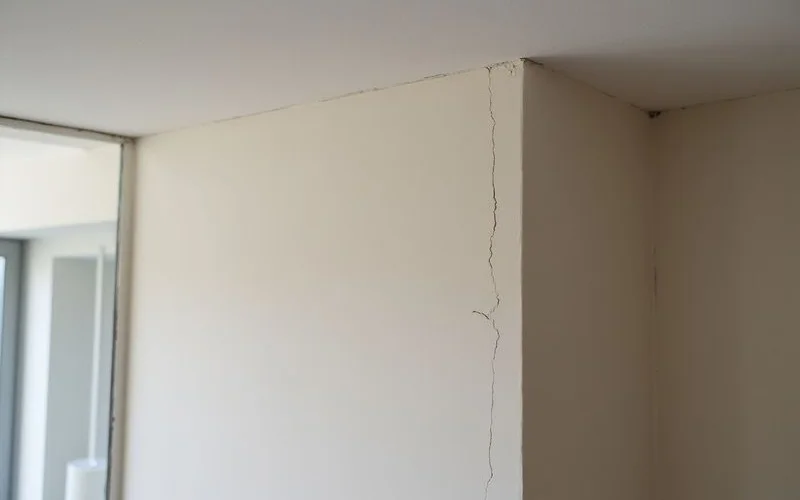
The locations that usually do not
Hairline cracking at wall-ceiling junctions. Fine cracking along tape lines. Small cracks scattered through a house with no relationship to each other or to anything outside. Cracking in a single wall of a room addition, which may relate to that addition rather than the main structure.
None of these is proof of nothing, but individually they are weak evidence, and treating them as alarming is how people end up buying repairs their houses did not need.
The recurring crack
This deserves its own section because it is the most informative interior observation available.
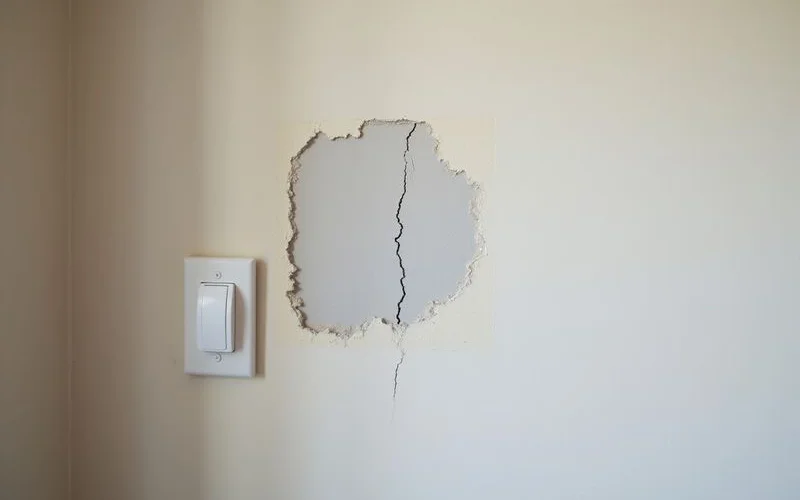
A crack that was patched, painted over, and has come back is telling you that movement continued after the patching. The filler is the weakest part of the wall at that location, so any further movement shows up there first.
If you know roughly when the patching was done, you have a dated reference point, which is more than most homeowners can offer an evaluator. Photograph it, note when the repair happened, and mention it.
What to document
| What | How |
|---|---|
| Location | Which room, which wall, relative to doors and windows |
| Pattern | Direction, whether it widens along its length |
| Displacement | Whether the two sides are out of plane |
| Photographs | One wide showing location, one close with scale |
| Date | On every photograph |
| Change | Pencil mark at the crack end, dated, re-photographed in 4–6 weeks |
| Correspondence | Anything else in the same part of the house |
| History | When it appeared; whether it has been patched before |
When appearance cannot answer the question
An interior crack cannot tell you how much the structure has moved, in which direction, whether it is still moving, or what caused it. Those require relative elevation readings across the house plus the context of drainage, plumbing, and site conditions.
That is why we will not look at a photograph of your hallway and tell you whether you need piers. Anyone who will is guessing, and the guess tends to favor the person making it.
The threshold for acting
Get it measured if cracks are changing, if several observations line up in the same part of the house, if a door or window has stopped functioning, if a patch has reopened, or if you need documentation for a sale.
Monitor if the cracking is minor, isolated, static, and not accompanied by anything else. Re-check in six months.
A foundation evaluation is what turns observation into evidence. For the exterior side of the same question, see brick and mortar cracks, and for the full set of observations, common foundation concerns.