Why water around a foundation matters
Soils that change volume with moisture do exactly that: they swell when wet and shrink when dry. In North Texas, where expansive clay is common, that cycle is a normal part of the ground behaving. What causes problems is not moisture itself but uneven moisture — one part of a foundation sitting in consistently wetter or drier soil than the rest.
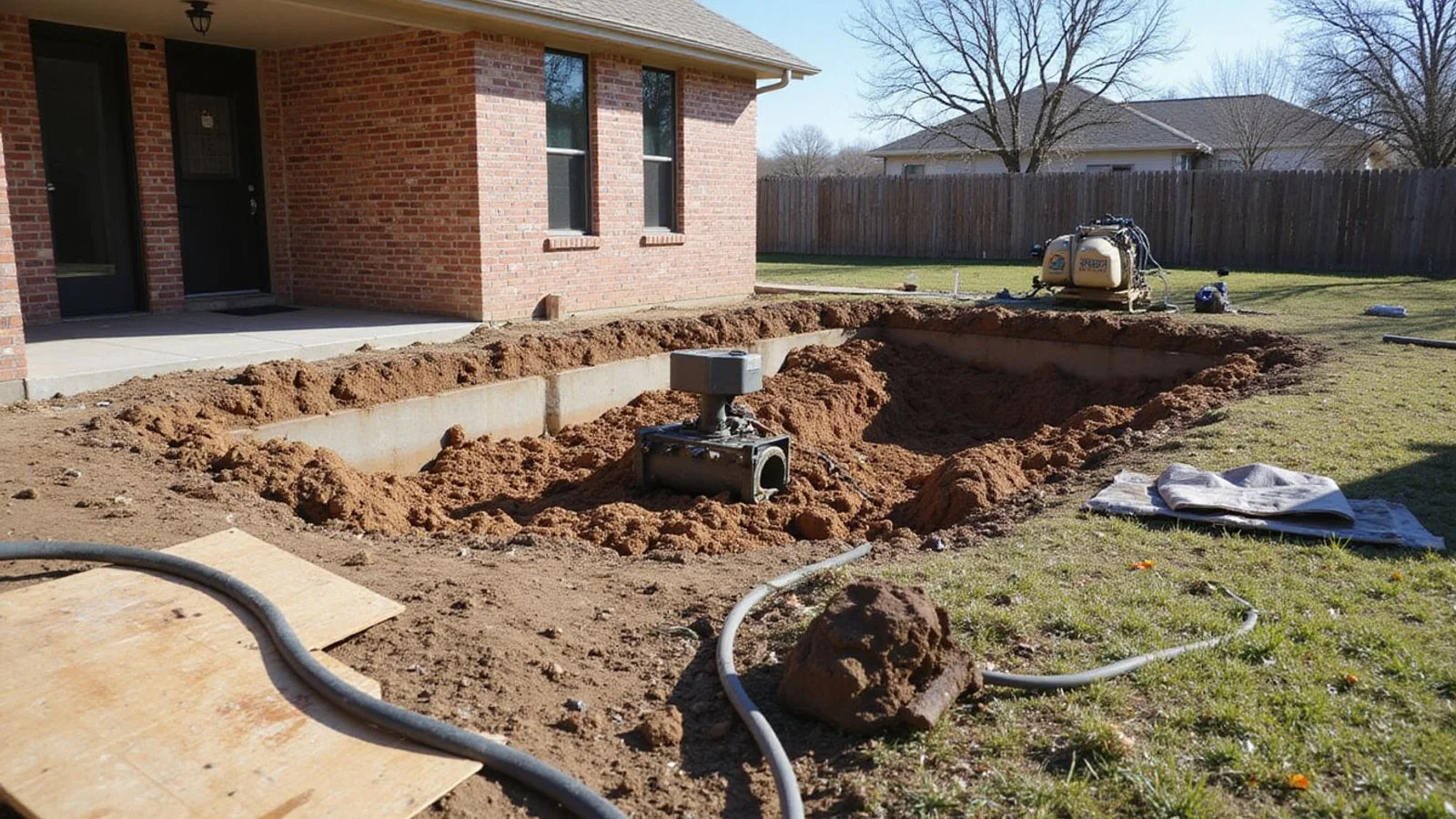
Drainage work aims at that unevenness. It moves roof water away from the structure, prevents surface runoff from pooling against one side, and manages subsurface water that would otherwise keep a section of soil saturated while the rest dries out.
That is a worthwhile objective in its own right. It is not the same as structural repair, and we are careful not to let the two blur together in a proposal. Drainage work and foundation repair in Fort Worth often appear on the same property, but they are priced and justified separately.
The components and what each one does
Grading shapes the ground so water runs away from the structure rather than toward it. Negative slope — ground falling toward the house — is one of the most common problems we see and one of the more straightforward to correct, provided there is somewhere for the water to go.
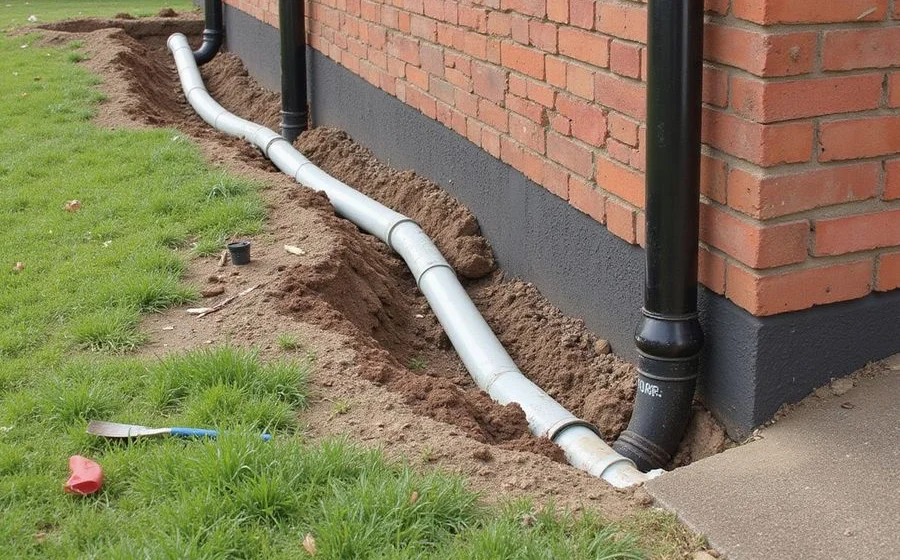
Downspout management handles roof water. Extensions carry discharge away from the foundation; buried solid pipe routes it to a proper outlet where extensions are impractical or keep getting moved.
Surface swales are shallow shaped channels that guide sheet flow across a lawn toward a discharge point. They handle volume well and need no maintenance beyond mowing.
Catch basins and surface inlets collect water at low points and feed it into buried pipe. They need clearing periodically or they stop working.
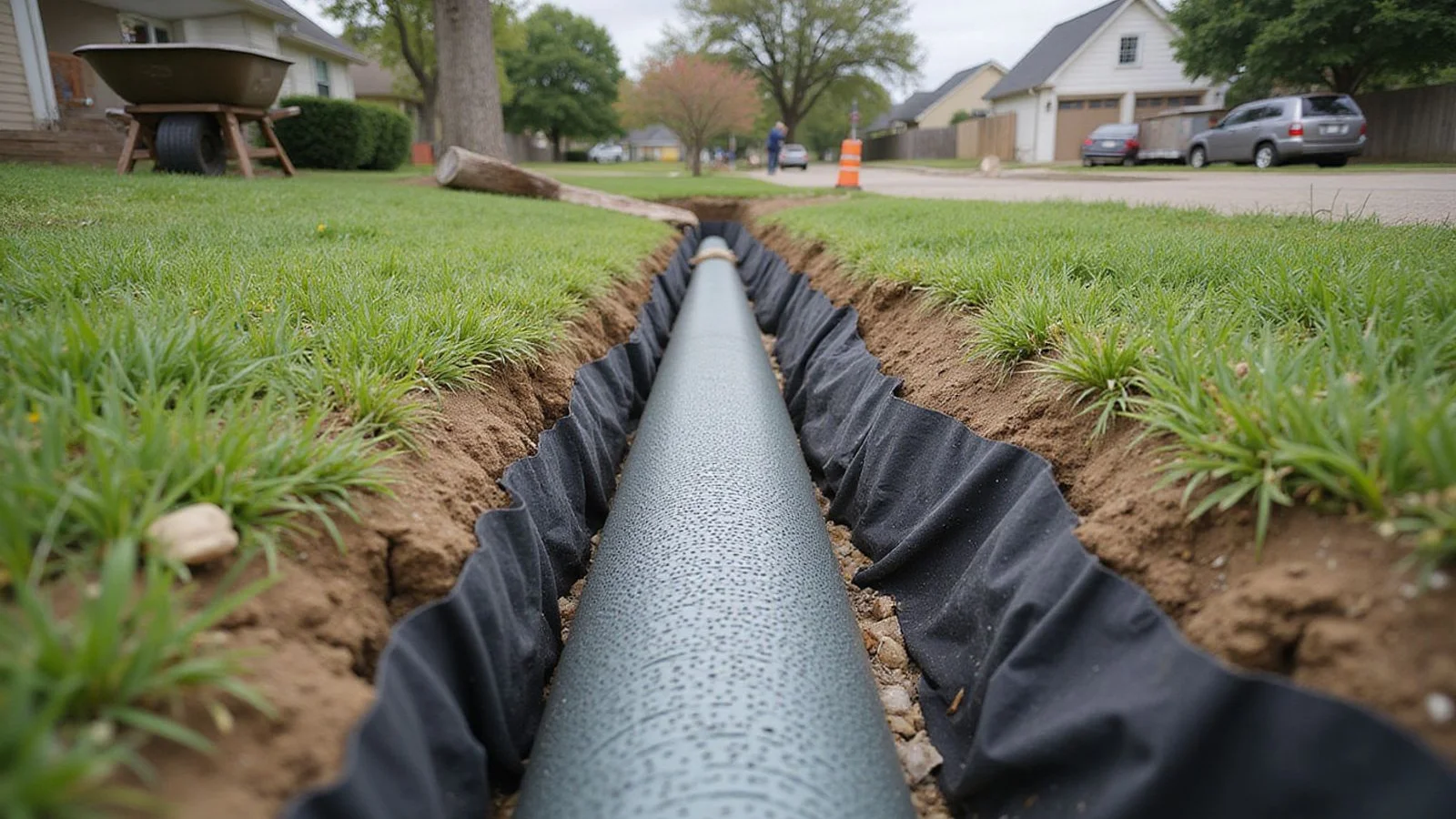
French drains handle subsurface water: perforated pipe in a gravel trench wrapped in filter fabric, carrying water in the soil to a discharge point.
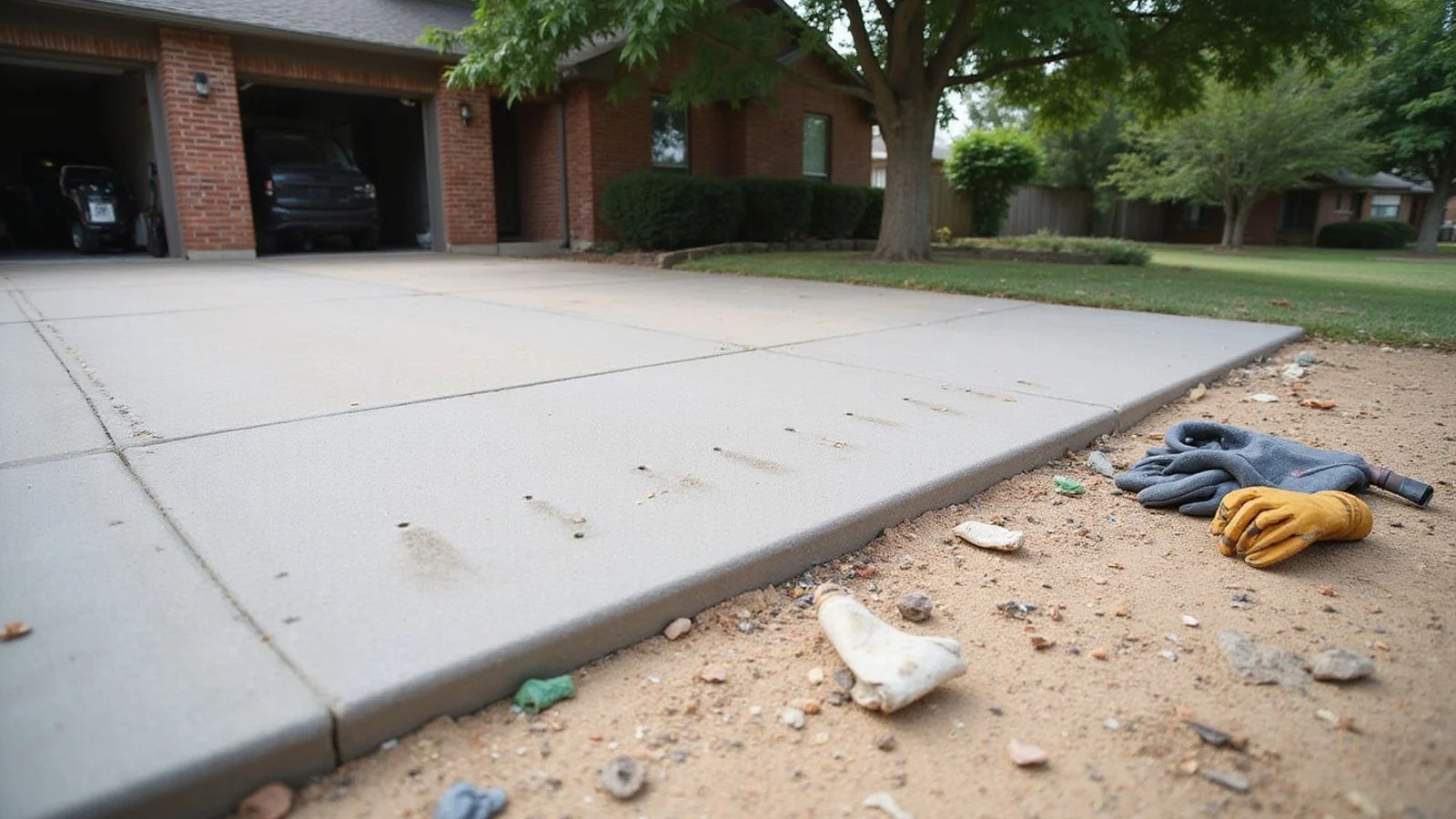
Channel and trench drains intercept runoff across a hard surface, typically a driveway, before it reaches a garage or a low area.
Most properties with a real water problem need two or three of these working together, not one of them everywhere.
What we look at before proposing anything
Where water sits after rain, and for how long. The direction the grade falls at each elevation of the house. Where every downspout discharges and what happens to that water afterwards. Irrigation coverage and whether any zone soaks the perimeter. Hardscape that concentrates runoff. Tree locations. And critically, where a drainage system could legally and practically discharge.
If we can look at the property after rain rather than during a dry spell, the picture is far clearer, and we will sometimes suggest waiting for that.
The honest limits
Drainage work will not lift a slab that has settled. It will not repair framing in a wet crawlspace. It will not undo years of differential soil movement. And on a property where the ground simply has nowhere to drain to, there are limits to what any system can achieve without substantial regrading.
We will not sell a drainage system as a cheaper alternative to a repair your house needs, and we will not use standing water as evidence that your foundation has failed. Both of those moves are common in this industry and both are dishonest.
If you want to understand where the line sits, the guide on drainage improvements versus structural foundation repair sets it out directly. If you want your house assessed rather than your yard, that starts with a foundation evaluation.