
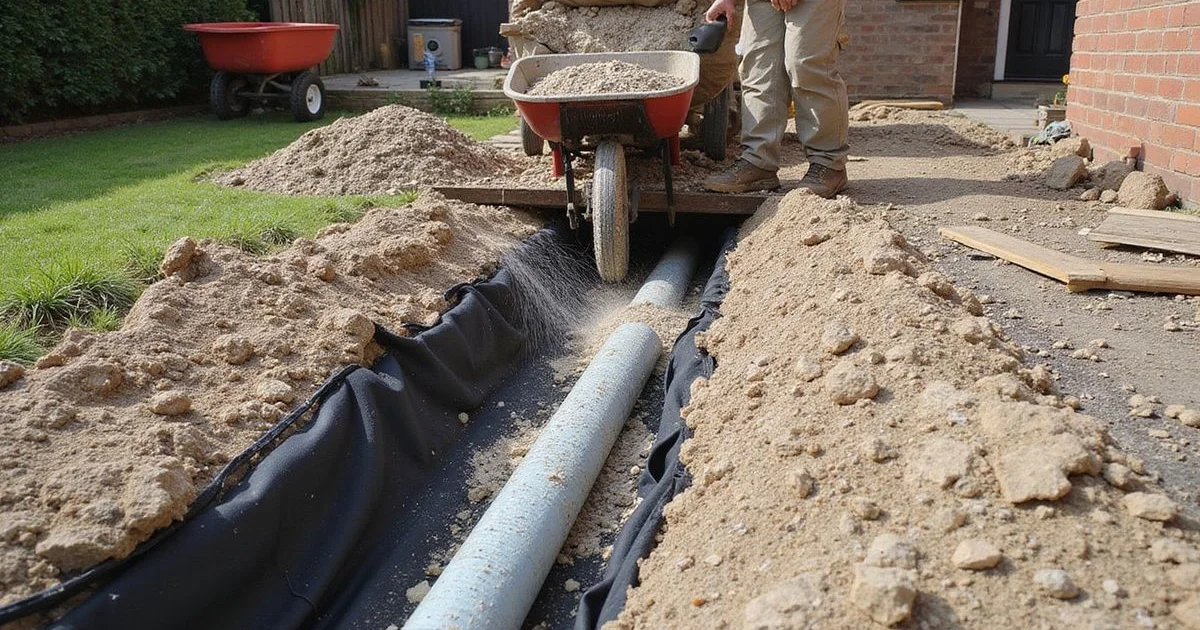
The components behind our drainage solutions service, explained so you can read a proposal.
The objective is consistency, not dryness
Drainage work around a foundation is not about keeping the soil dry. Soil in North Texas is going to take on moisture and lose it; that is what it does.
The objective is to prevent one part of the perimeter being much wetter or much drier than the rest, because uneven moisture produces uneven soil volume, which produces differential movement.
That framing matters because it changes what a good drainage scheme looks like. It is not about the biggest system available — it is about removing the specific thing that is concentrating water in one place.
The components, and what each one is for
Grading shapes the ground so surface water runs away from the structure. Where the grade falls toward a house, that is usually the first thing to correct and often the most valuable.
Downspout management handles roof water. A roof collects a remarkable volume, and a downspout discharging at the foundation delivers all of it to one spot every time it rains. Extensions carry it away; buried solid pipe routes it to an outlet where extensions keep getting moved.
Surface swales are shallow shaped channels that guide sheet flow across a lawn to a discharge point. They handle volume well, cost little, and need no maintenance beyond mowing.
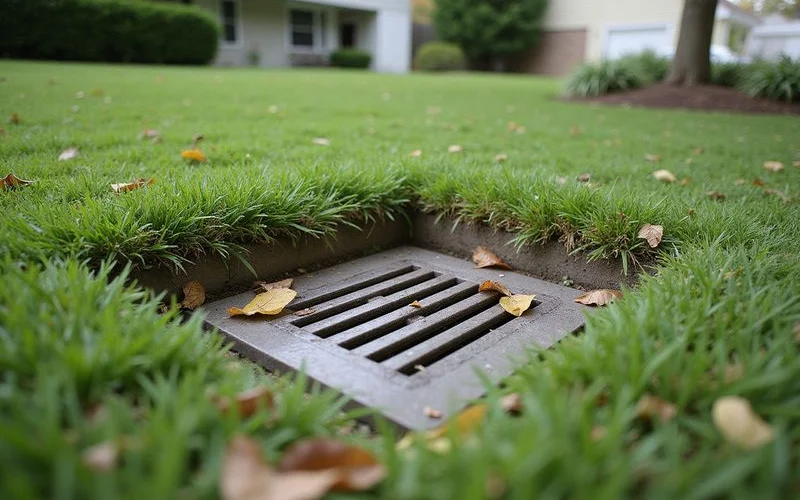
Catch basins and surface inlets collect water at low points and feed it into buried pipe. Simple, effective, and they stop working when nobody clears them.
Channel and trench drains intercept runoff across a hard surface — typically a driveway — before it reaches a garage or a low area.
French drains handle subsurface water: perforated pipe in a gravel-filled trench, wrapped in geotextile fabric, carrying water in the soil to a discharge point.
Sump systems apply where gravity discharge is not available and water has to be lifted.
How a french drain is built
| Element | Purpose | What goes wrong without it |
|---|---|---|
| Trench with consistent fall | Gravity moves the water | Water sits in the pipe |
| Geotextile fabric | Keeps fine soil out of the aggregate | Drain silts up over a few seasons |
| Free-draining aggregate | Voids carry water to the pipe | Flow restricted |
| Perforated pipe | Collects and conveys water | No conveyance capacity |
| Outlet with fall | Somewhere for water to go | System backs up and stops working |
The fabric and the fall are the two elements most often compromised, and they are the two that determine whether the drain still works in five years.
Surface and subsurface are different problems
This is worth being explicit about, because proposals frequently offer one solution for every situation.
Surface water is what runs across the ground during and after rain. Swales, inlets, channel drains, and grading handle it.
Subsurface water is what is in the soil. French drains and similar handle that.
Roof water is its own category with its own volume and its own concentration.
Most properties with a genuine water problem need a combination, because water arrives by more than one route. A scheme offering french drains as the answer to a lawn that sheets water across it has not looked at the property closely.

The discharge question
Every system has to put water somewhere. That somewhere needs adequate fall, needs to be legal, and needs not to create a problem elsewhere.
Discharging onto a neighbouring property is not acceptable. Discharging into a location that already floods achieves nothing. In some situations there are jurisdictional requirements about where stormwater may be directed.
Confirm the discharge point before work starts and make sure it is in the written scope. It is the question that most often turns out to constrain the whole design.
Maintenance, honestly
Clear catch basins and inlets a couple of times a year, and after leaf fall. Check outlets are not blocked or buried. Keep gutters clear, because a blocked gutter defeats the downspout management downstream of it.
French drains have a working life measured in years to decades depending on soil, fabric, and how much fine material is in play. They are not permanent installations that require no thought.
What drainage will not do
It will not lift a slab that has settled. It will not repair framing in a wet crawlspace. It will not be promised as a substitute for structural repair — see drainage improvements versus structural foundation repair for where that line sits.
For the service, see drainage solutions. For the habits that support it, see foundation maintenance for Fort Worth homes.