
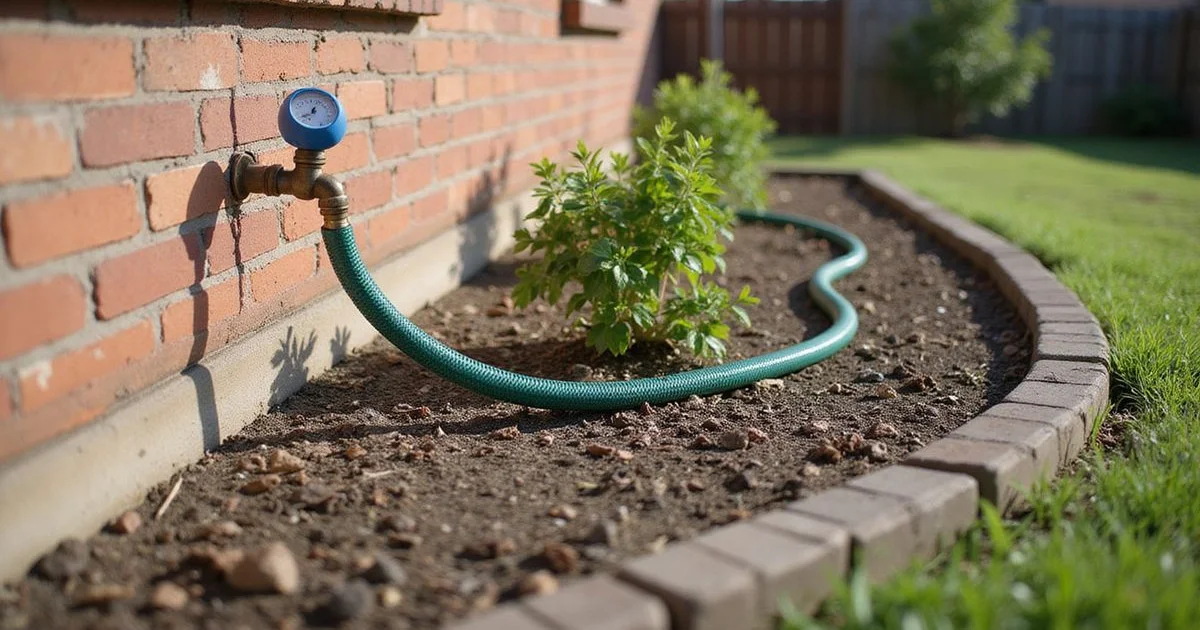
The maintenance side of drainage solutions: managing perimeter moisture through a North Texas summer.
What the dry season does
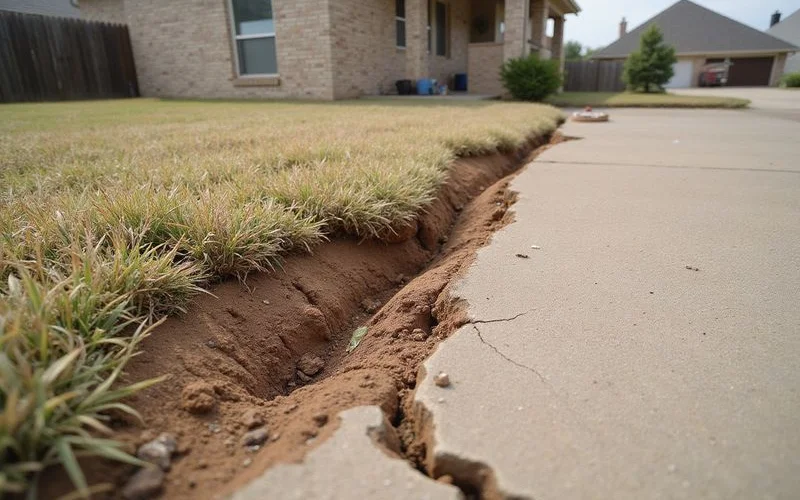
Expansive clay shrinks as it dries. Through a hot North Texas summer, that shrinkage is visible at ground level as soil pulling back from the slab edge, sometimes with surface cracking across the yard.
The shrinking itself is not the problem. Uniform shrinkage under a whole house produces very little change in the structure. What causes damage is differential shrinkage: one side of the house losing moisture faster than another.
The usual reasons one side dries faster: a mature tree drawing moisture from the soil on that elevation, sun exposure differences, an irrigation zone keeping one area damp while another gets nothing, or hardscape shedding water away from one side.
The goal: uniform, not wet
Perimeter watering aims to moderate the drying cycle, keeping soil moisture around the foundation more consistent than it would otherwise be.
It does not aim to keep the soil wet. Saturated soil against a foundation brings its own problems, and swelling clay pushing upward is no better than shrinking clay withdrawing support.
“Even and moderate” is the entire technique.
How to set it up
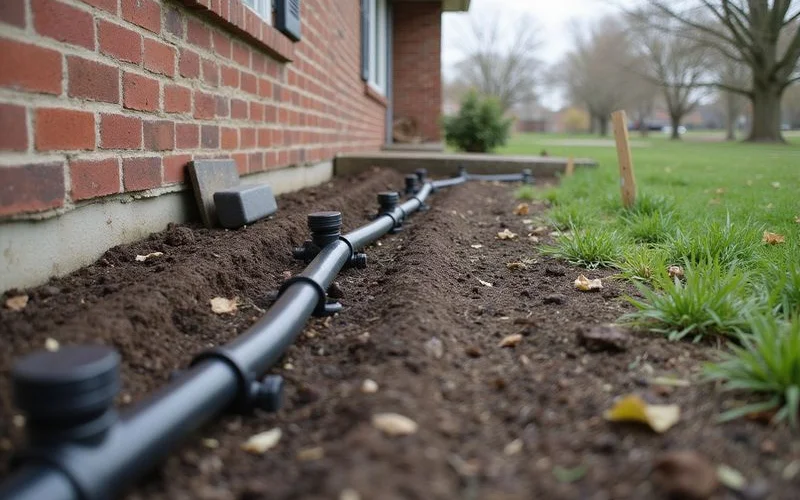
Method. Soaker hose is the standard choice because it applies water slowly and evenly along its length. Drip line with emitters works too and offers more control. Sprinklers are harder to control, produce uneven coverage, and waste water to evaporation.
Position. Around twelve to eighteen inches out from the foundation. Consistent distance matters more than the exact number.
Coverage. The whole perimeter. This is the point people most often get wrong — watering only the side where they noticed something creates the very differential they were trying to avoid.
Timing. Early morning or evening reduces evaporation losses.
Frequency. Regular and modest through the dry months, adjusted for actual conditions. A timer helps with consistency; checking the timer against the weather helps more.
Restrictions. Check current watering rules for your city. They change and they vary across the area.
Maintenance of the system itself
Soaker hoses degrade in sun and eventually split or clog. Check flow along the length periodically rather than assuming the whole run is delivering water.
Timers fail, batteries die, and a system that stopped working in July is no help in August.
Emitters block. Hoses get moved by mowing, gardening, and dogs.
Five minutes of inspection a few times through the season keeps it doing what you installed it for.
What watering will not do
| It will not | Because |
|---|---|
| Reverse movement that already happened | Re-swelling soil may close a surface gap without changing the structural position |
| Fix a drainage problem | Water concentrating from a downspout needs the downspout fixed |
| Address a plumbing leak | An under-slab leak introduces water regardless of what you do outside |
| Compensate for poor fill or construction | Different problem entirely |
| Replace repair where one is warranted | Maintenance supports stability; it does not restore elevation |
That first row is worth dwelling on. Soil re-swelling in autumn may close the visible gap at the slab edge. That makes the symptom disappear without telling you anything about whether the structure moved.
When to stop watering and start measuring
If doors have started binding, if cracks have appeared or lengthened, if a floor feels different, or if several observations line up in one part of the house — those are measurement questions, not moisture questions.
A foundation evaluation records elevations across the house and turns what you noticed into evidence. Watering, meanwhile, remains sensible maintenance whatever the outcome.
For the rest of the routine, see foundation maintenance for Fort Worth homes. For the soil behavior behind all of this, see Fort Worth soils and foundations, and for the broader water-management picture, drainage solutions. Where runoff rather than drought is the problem, French drains and surface drainage covers the other half of the moisture question.