
A term you will find in every underpinning quote, including the ones on our repair methods page.
The definition
You will see this phrase in every underpinning proposal, usually without explanation.
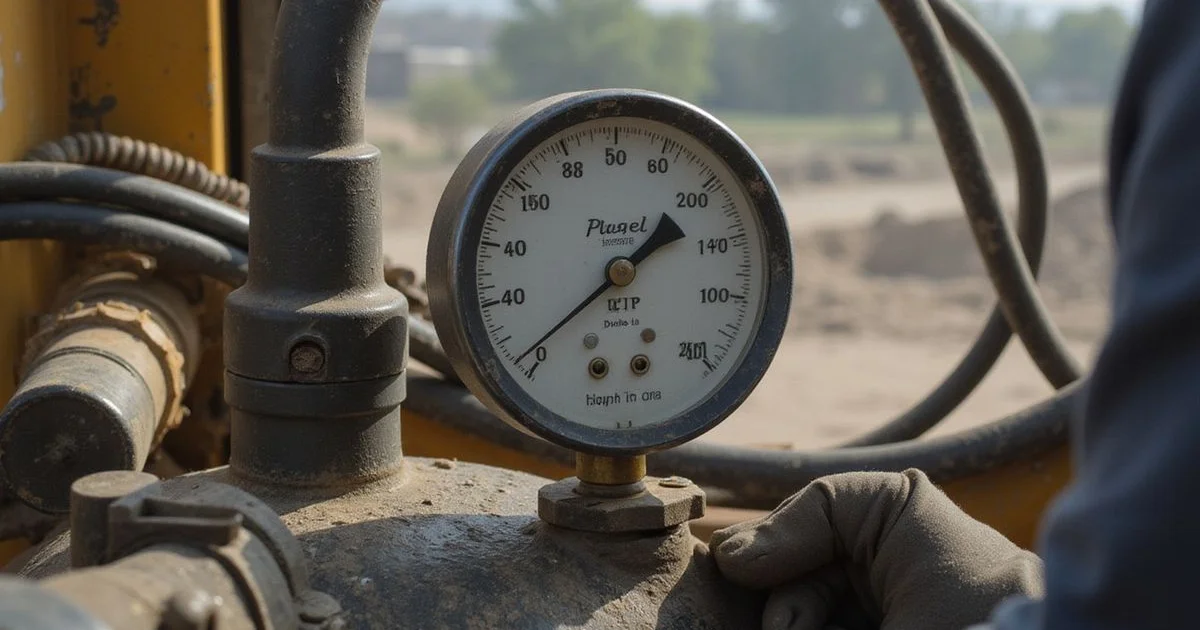
Driven to refusal means the pier is advanced into the ground until the hydraulic force required to push it further reaches a defined threshold — the point at which it can no longer be meaningfully advanced against the reaction available.
That resistance is treated as evidence that the pier has reached material capable of carrying the load it will take.
The crucial point: refusal is a measured condition, not a depth. It is defined by pressure, not by feet.
Why that distinction matters
If refusal were a depth, a proposal could state it in advance and you could check it. Because it is a pressure threshold, the depth at which it occurs is determined by the ground rather than by the plan.
This is why two piers installed twenty feet apart on the same house can end at noticeably different depths, and why that is not a defect. What is beneath one corner may not be what is beneath another, particularly where fill was placed during construction or the site was cut and filled to make a level pad.
It is also why a proposal stating a single fixed depth for every location should prompt a question. That number is a prediction, and the contract should say what happens if the ground disagrees with it.
The load-bearing stratum
The material the pier is aiming for is sometimes called a load-bearing stratum: a layer competent enough to carry structural load without significant further compression.
Above it sits the active zone — the upper soil whose volume changes with moisture through wet and dry cycles. That zone is why foundations move in this region, and transferring load past it is the entire purpose of underpinning.
What the competent layer consists of varies by location. It may be limestone, dense clay, or another firm material. What matters for your project is not which it is but that the pier reached it.
Premature refusal, and how it hides
Here is the failure mode worth understanding.
A pier can encounter resistance from something that is not a competent stratum: a buried slab, rubble fill, a rock fragment, or a dense band with soft material underneath. The hydraulic pressure rises, the threshold is met, and the pier appears to have refused.
It has not reached what it needed to reach, and in service it may settle.
The indicator is usually an anomalously shallow depth at one location compared with its neighbor. That is only visible if depths are recorded per location — which is the practical argument for insisting on installation records.

Questions worth asking
What depth is anticipated, and what happens if it runs deeper? The contract should address variance rather than leaving it to an invoice conversation.
How is refusal defined for your system? Different systems and different equipment have different thresholds. A specific answer is a good sign.
Will I receive per-location records? Depth and pressure for each pier, not a summary.
What happens if a location refuses unusually shallow? Is it investigated and relocated, or accepted and moved on from?
Why the records outlive the project
The installation log is the only site-specific subsurface data your property will ever have unless someone commissions geotechnical borings.
It tells a future engineer what was found. It tells a future buyer what was installed and where. It tells you, if movement recurs, whether the piers were founded where they should have been.
Keep it with the rest of the assessment documents. For the systems this term applies to, see steel pier systems and concrete pier systems, and for how method is selected, repair methods.