
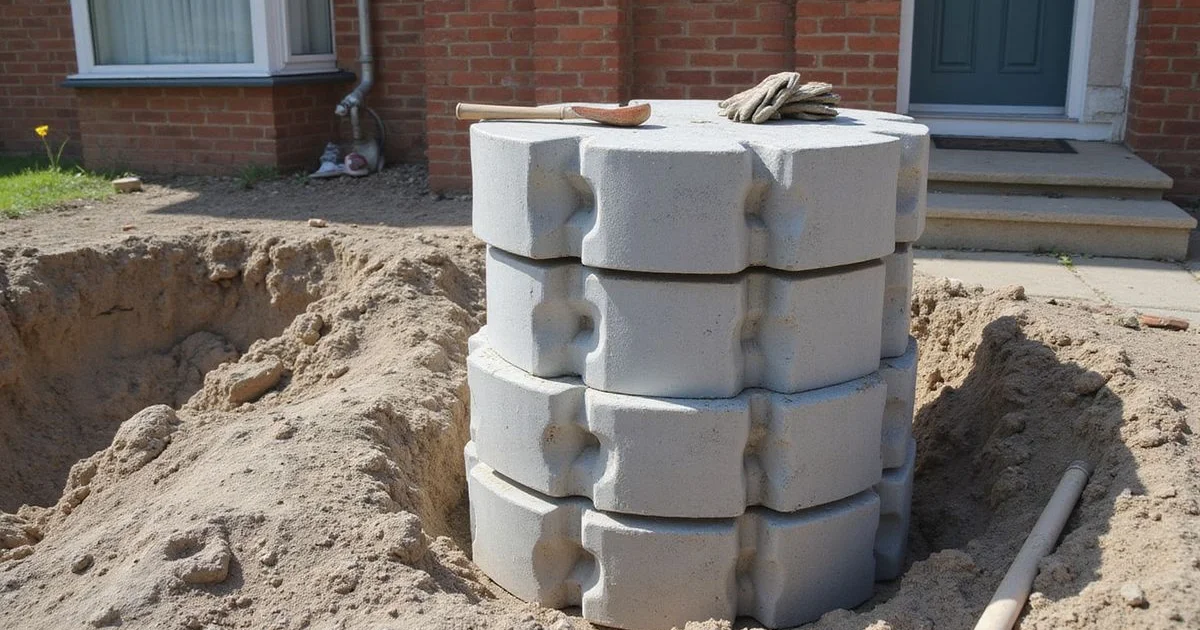
The second of the two systems on our repair methods page, with its strengths and its real limitations.
What a pressed concrete pier is
A pressed concrete pier is a column of precast concrete cylinders, driven into the ground one section at a time until the column reaches material capable of carrying load.
The cylinders interlock as they stack, forming a continuous column. Once refusal is reached, a bracket connects the foundation to the top of the column and load transfers onto it.
It is an established residential underpinning method, widely used, and in the right conditions entirely appropriate. It is also frequently either oversold as universally adequate or dismissed as inferior, and neither framing is accurate.
How installation works
Excavate at the grade beam or footing to give working access and room for the bracket.
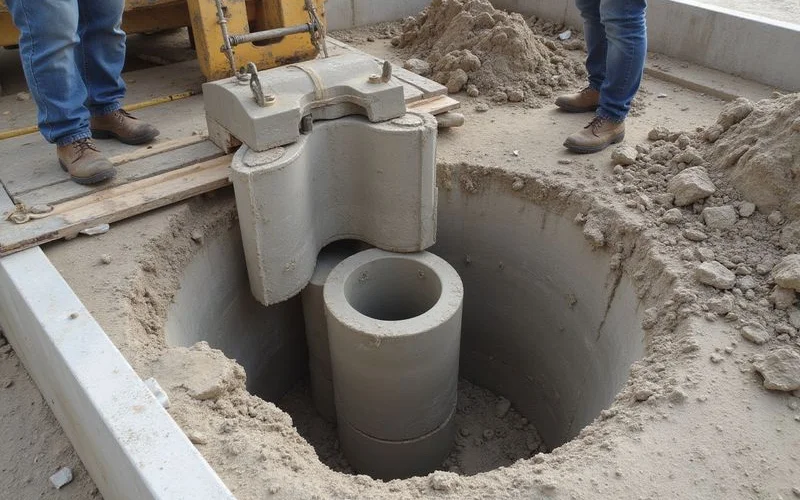
Position the ram. A hydraulic ram bears against the foundation, using the structure’s weight as reaction.
Press. A cylinder is placed and driven down. Another is placed on top and driven. The column advances as cylinders are added.
Reach refusal. Driving continues until the pressure required indicates the column has reached competent material.
Transfer load. A bracket is fixed beneath the foundation and connected to the pier.
Record. Location, depth, and final pressure for each pier.
Backfill and reinstate per the written scope.
The sequence is essentially the same as for steel — the difference is what is being driven and how far it can practically go.
Where the method fits well
| Condition | Why concrete works |
|---|---|
| Competent material is relatively shallow | The depth required is well within the method |
| Site conditions are consistent | Less risk of one location behaving unexpectedly |
| Loads are moderate residential | Within the system’s capability |
| Budget matters and the site suits it | Lower cost per location than steel |
Where those conditions hold, pressed concrete does the job and the money saved is real. There is no virtue in over-specifying a system for a site that does not need it.
The limitations, stated honestly
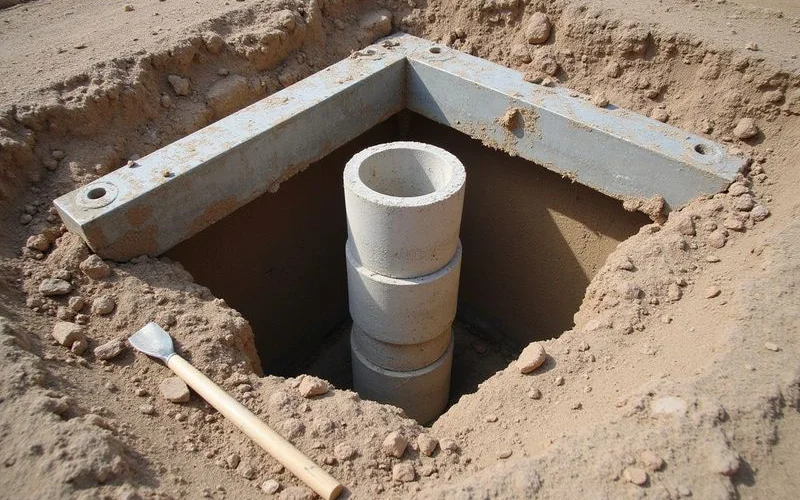
Surface area and clay grip. A wider column presents more surface for expansive soil to act on. When clay swells, it can grip the pier and apply upward force — the phenomenon that makes a narrower profile advantageous in highly active soils.
Premature refusal. A wider column is more readily stopped by an obstruction, a rubble layer, or a dense band at shallow depth. The pressure reads as refusal, but the pier is bearing on something that is not a competent stratum. This is the failure mode worth understanding, and installation records are what expose it.
Practical depth. Where competent material is a long way down, the method becomes impractical relative to a system designed to reach further.
None of these makes the method wrong. They make it site-dependent, which is the point of this whole section of the site.
What to ask about a concrete pier proposal
What depth is anticipated at each location? And what happens if refusal occurs at an unexpectedly shallow depth — is that investigated or accepted?
Will I receive installation records? Depth and pressure per location is the evidence of what was actually reached.
Why this method rather than steel here? A good answer references site conditions. A weak answer references what the company installs.
What are the warranty terms? They differ by system. See understanding foundation repair warranties.
Choosing between the two
The honest position is that neither system is universally correct, and a company that only offers one has a structural incentive to tell you it is.
The direct comparison guide sets the two against each other on depth, soil behavior, cost, and how the choice should be made. The repair methods page covers how we approach the selection, and what driven to refusal means explains the term both systems rely on.