
One of the two systems covered on our repair methods page, explained for homeowners reading it in a quote.
What a steel pier is
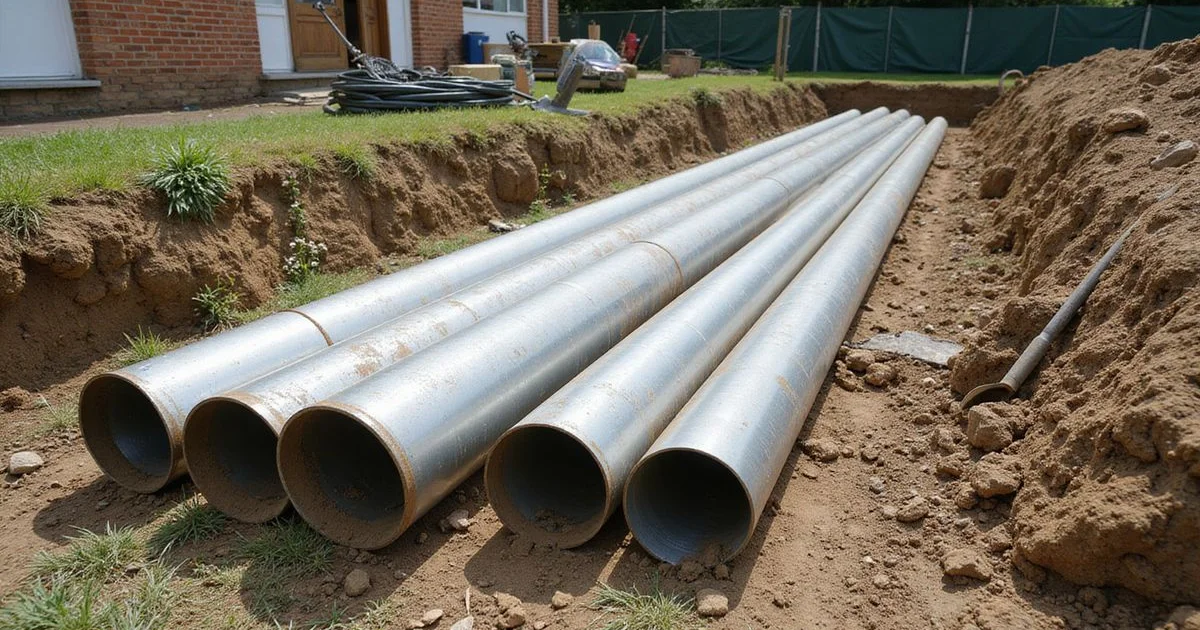
A driven steel pier is a length of steel pipe, installed in sections, advanced vertically into the ground beneath a foundation until it reaches material capable of carrying load.
The sections are joined as the pier advances, so the pier can be taken to whatever depth the site requires rather than being limited by the length of a single piece. Once refusal is reached, a bracket connects the foundation to the pier and load transfers onto it.
The key characteristics are reach and profile. A slim steel section can pass through material that would stop a wider cylinder, and its narrow cross-section presents less surface area for expansive soil to grip during wet cycles.
How installation works
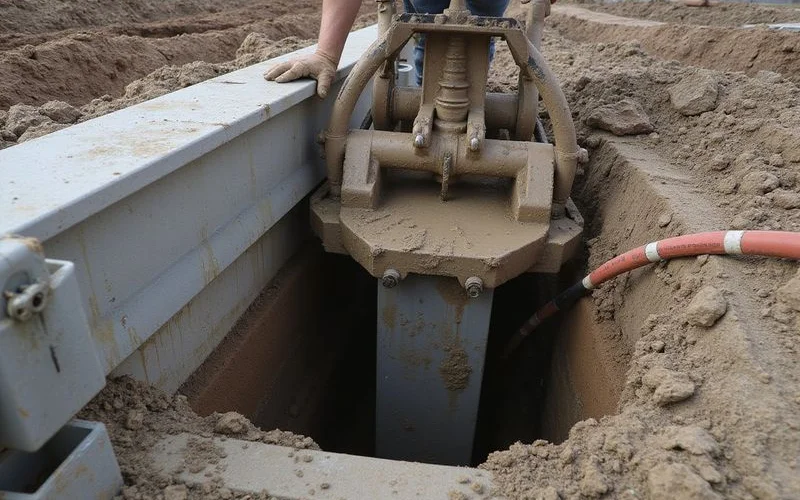
Excavate. An opening is dug at the grade beam or footing to give access and to allow the bracket to be positioned.
Set up the ram. A hydraulic ram is positioned bearing against the foundation. The structure’s own weight provides the reaction force.
Drive. Pipe sections are advanced one after another, joined as they go, with the hydraulic pressure monitored throughout.
Reach refusal. Driving continues until the pressure required indicates the pier has reached competent material. That is refusal — a measured condition, not a target depth.
Transfer load. A bracket is fixed to the underside of the foundation and connected to the pier, moving load from the soil beneath onto the pier.
Record. Location, depth, and final pressure are recorded for each pier. That record is the site-specific subsurface evidence your property now has.
Backfill. The excavation is filled and compacted, and the surface reinstated per the scope.
When steel suits a project
| Condition | Why steel fits |
|---|---|
| Depth to competent material is significant | Sections join, so reach is not limited |
| Depth is uncertain | Adapts to what the ground actually presents |
| Expansive clay is active near the surface | Narrow profile offers less grip during swelling |
| Obstructions may be present at shallow depth | Slimmer section more likely to pass through |
| Higher loads at a location | Capacity available in the system |
The corresponding conditions where pressed concrete may be the better economic choice — shallow, consistent, known bearing material — are covered in concrete pier systems and compared directly in steel versus concrete piers.
What to ask about a steel pier proposal
Which system? Steel pier products differ in diameter, wall thickness, construction, and corrosion protection. The proposal should name the product so you can look at its documentation.
What depth is anticipated, and what happens if it runs deeper? Depth is a prediction until the pier is driven. The contract should state how variance is handled rather than leaving it as a surprise invoice.
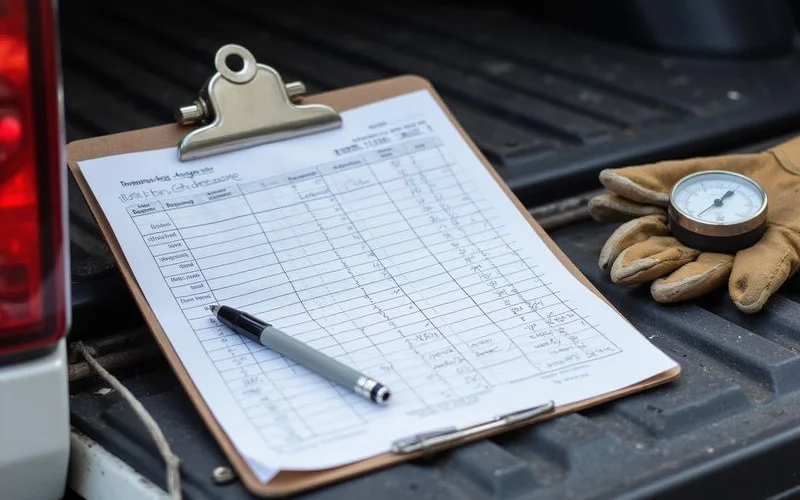
Will I receive installation records? Depth and pressure at each location. Without them, nobody can later distinguish a pier that reached bearing material from one that stopped on an obstruction.
What are the warranty terms for this system? Different systems carry different terms, and the warranty is frequently where two similar proposals actually differ. See understanding foundation repair warranties.
The limitation worth knowing
Reaching greater depth is only valuable if greater depth is what your site requires. On a property where competent material is shallow and consistent, paying the steel premium buys reach you do not need.
That is not an argument against steel. It is an argument for the method being selected from evidence about your property rather than from what a company prefers to install. The repair methods page covers how that selection should work.