

The exact scope of crawlspace encapsulation, and the work it is frequently bundled with but does not include.
The definition
Crawlspace encapsulation is a moisture-control system. It places a continuous sealed barrier between the ground and the air in the crawlspace, so moisture evaporating from the soil stops entering that space.
The intended result is a drier crawlspace and, consequently, drier framing above it. That is the entire purpose. Everything else it gets credited with in marketing belongs to some other piece of work.
What is included
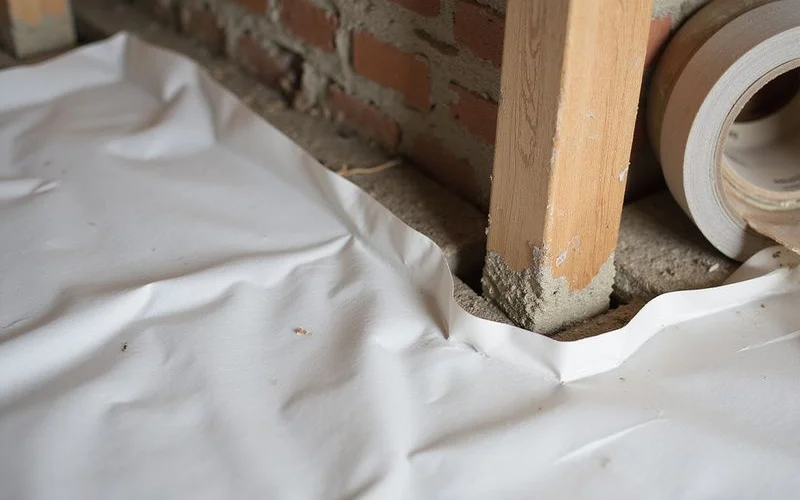
Ground cover. A polyethylene barrier laid across the crawlspace floor. Specification varies by product; thickness and durability are worth asking about.
Sealed seams. Overlapped and taped or otherwise sealed, rather than simply laid over one another. This is what distinguishes encapsulation from a basic ground cover.
Wall liner. In a full encapsulation, the barrier is carried up the foundation walls and terminated at a defined height, so the ground surface is fully enclosed.
Pier and penetration detailing. The liner is sealed around piers, pipes, and duct penetrations so the barrier remains continuous. Fiddly, time-consuming, and the difference between a sealed space and a mostly-sealed one.
Access door detailing. The point most often skipped, and the one that undermines the rest when it is.
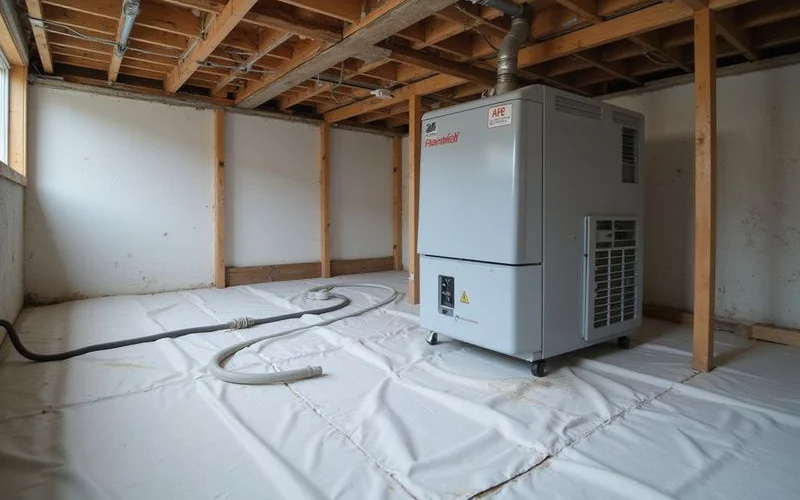
Dehumidification, where specified. With its power supply and condensate drainage stated in the scope.
What is not included
| Not covered by encapsulation | Why | Where it belongs |
|---|---|---|
| Sagging or deflected joists | Structural capacity, not moisture | Framing repair |
| Settled or failed piers | Support, not moisture | Pier-and-beam repair |
| Decayed sill plates | Requires replacement, not sealing | Framing repair |
| Bulk water entering | Needs the source addressed | Drainage solutions |
| Plumbing leaks | Different trade entirely | Licensed plumber |
| Active pest infestation | Different trade entirely | Pest control professional |
| Floor leveling | Position, not moisture | Pier re-support |
None of these is a criticism of encapsulation. They are the boundaries of what it is, and knowing them is how you read a proposal.
Sequence matters
Bulk water first. If water is entering the crawlspace — from surface runoff, poor grading, or a plumbing failure — that gets addressed before a barrier goes in. Laying a liner over standing water traps it, hides the source, and prevents anyone seeing what is happening above.
Structural assessment second. If framing has already been damaged, that is identified before the space is sealed. Encapsulating a crawlspace with decayed sill plates means the next person to look at them has to undo the liner.
Barrier third. Once the space is dry and the structure is understood.
Why the bundling matters
The commercial pattern worth being alert to is the single-line crawlspace quote: one number covering structural work, moisture control, and drainage without saying what proportion goes where.
It is impossible to compare against another proposal, impossible to decline part of it, and impossible to verify afterwards. Asking for the breakdown is reasonable, and the willingness of a provider to give it tells you something.
Our proposals list them separately for exactly this reason. See crawlspace encapsulation for the service, and crawlspace moisture, floor framing and evaluation for how the moisture and structural questions relate.