After a Dry Summer: What to Watch on Your Fort Worth Foundation This Fall
A dry Fort Worth summer can leave new cracks or sticking doors as soils shift. What to observe this fall, what to document, and when an evaluation makes sense.
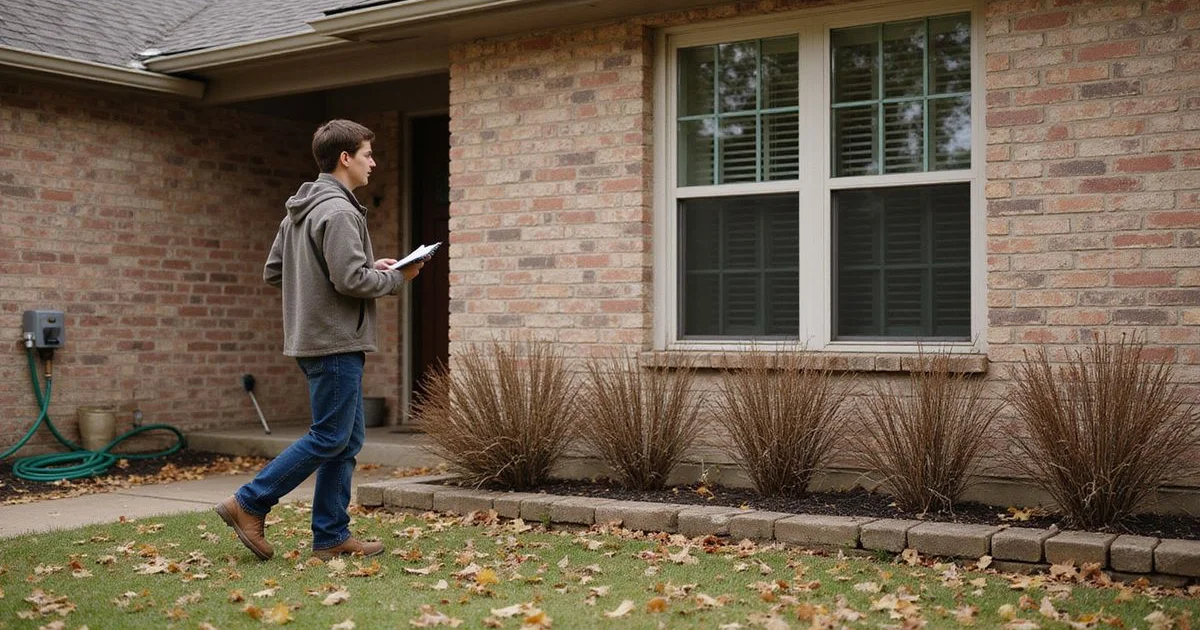
Fall is when the phone starts ringing. Not because anything dramatic has happened, but because the summer is over, people are back indoors paying attention to their houses, and a door that has been catching since August is finally annoying enough to think about.
This post is about what to actually look at, what to write down, and how to tell the difference between something worth acting on and something worth watching. It is the same sequence we walk through before quoting foundation repair in Fort Worth: observe carefully, record dates, and only then decide whether an evaluation is warranted.
Why fall surfaces things
Through a dry North Texas summer, clay soils shrink. Through the wetter months that follow, they take moisture back on and swell again. Neither phase is unusual. What creates problems is that the drying and re-wetting rarely happen evenly around a house.
The practical consequence is that changes which began in July often become obvious in September and October, when the weather shifts and when people stop attributing every sticking door to humidity. A door that binds in August might be timber swelling. The same door still binding in November, when the air has dried out, is telling you something else.
That is why fall observations carry a bit more information than summer ones. They have survived a change in conditions.
The five things worth looking at
1. Doors and windows
Walk the house and operate every interior door. Note which ones bind, which edge they bind on, and whether the gap along the top of the frame is even.
The pattern matters more than any single door. One sticky door in a hallway is probably just a door. Three doors on the same side of the house, all binding on the same edge, is a pattern.
2. Exterior masonry
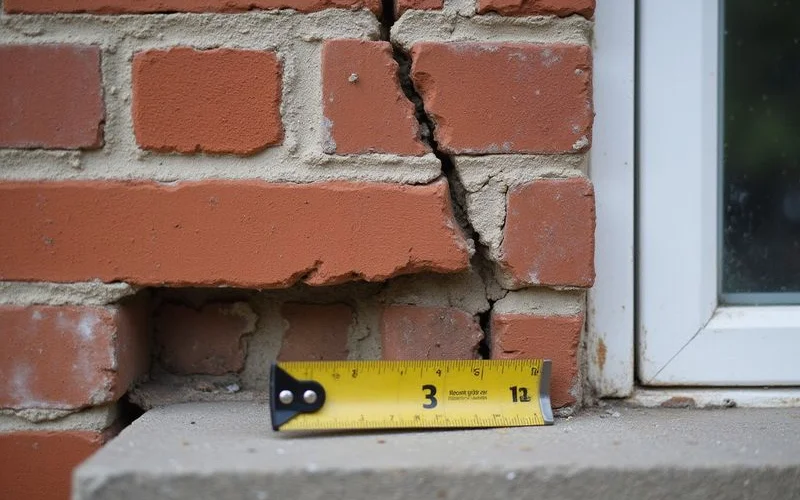
Walk the perimeter and look above and below window and door openings, and at the corners. Stair-step cracking that follows the mortar joints is the classic observation.
Photograph anything you find: one wide shot showing where it sits on the wall, one close shot with a tape or a coin for scale. Write the date on the photo file or in a note.
3. Interior finishes
Diagonal cracks from the corners of door and window openings. Separation where trim or baseboard meets the wall. Cracks reopening in places that were patched at some point.
A patch that has reopened is more interesting than a crack you have always had, because it tells you something moved after the patch went in.
4. Floors
Does anything feel different underfoot? A room that seems to fall toward one corner, a spot that gives slightly, tile that has cracked in a line rather than in a single spot.
You do not need equipment for this. Walk the house barefoot and pay attention.
5. Outside at ground level
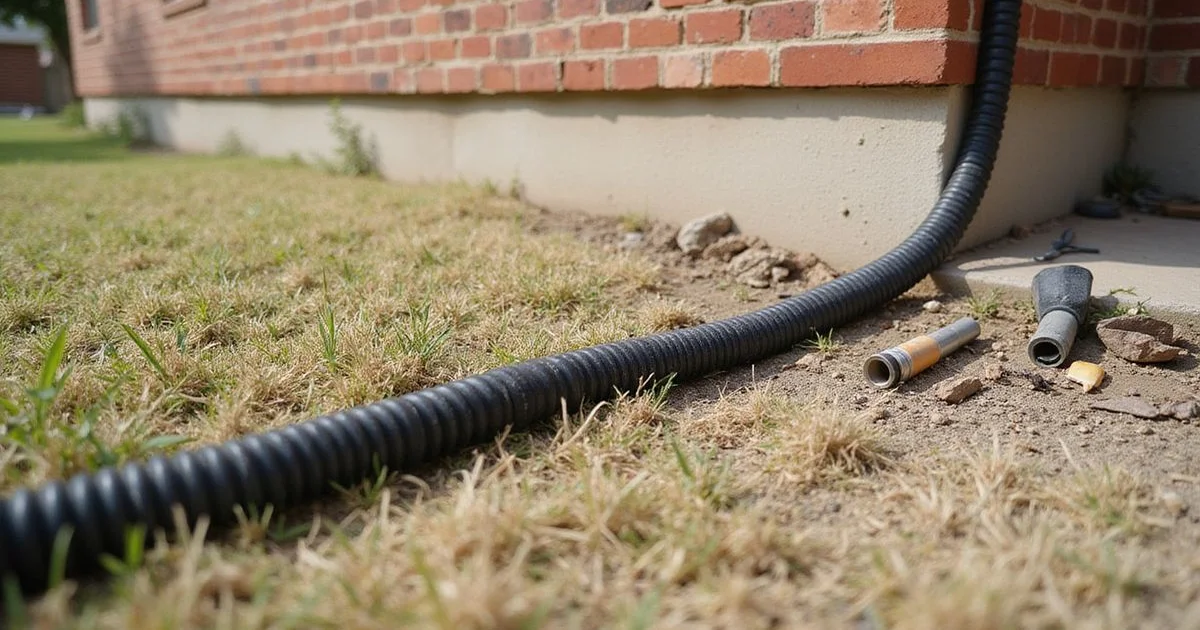
Where is the soil relative to the slab edge after the summer? Has the grade changed? Is there a downspout discharging right at the foundation, and has it always been like that? Did a large tree come out this year, or go in?
That last one matters more than people expect. Removing a mature tree changes the moisture regime on that side of a house substantially, in both directions.
What to write down
Documentation is genuinely the most valuable thing you can do at this stage, and it costs nothing.
Make a dated record
For each observation: where it is, what it looks like, and the date. For cracks, mark the end lightly in pencil and date the mark. Re-photograph in four to six weeks. The comparison between two dated records is worth more than any single photo.
If you end up requesting an evaluation, that record changes the conversation. “It has been like that for years” and “it appeared in August and has grown since” point in genuinely different directions, and without a record you are relying on memory.

Things worth fixing yourself this fall
Before anyone quotes you for anything structural, there are a few cheap items worth handling.
Clear the gutters, because a blocked gutter turns into a downspout problem. Check where each downspout discharges and extend any that are dumping water at the foundation. Look at the grade for anywhere the ground falls back toward the house and note it. Check irrigation coverage for a zone that is soaking one corner while the rest of the perimeter gets nothing.
None of these are repairs. All of them remove a variable that would otherwise complicate an evaluation, and some of them may be the entire cause of what you noticed.
| Observation | Worth monitoring | Worth an evaluation |
|---|---|---|
| Single hairline crack, unchanged for years | Yes | Not on its own |
| Two or more doors binding on the same side, persisting | No | Yes |
| Crack that has visibly lengthened since summer | No | Yes |
| Soil gap at slab edge, nothing else changed | Yes | Not on its own |
| Porch or addition separating from the house | No | Yes |
When to call
Call when something is changing, when observations line up in the same part of the house, when a door or window has stopped functioning properly, or when you are buying or selling and need the question answered with documentation.
Do not call because a single hairline crack in a hallway has been there since 2019 and a website made you anxious about it.
The evaluation is what turns observations into evidence, because it measures elevation across the house rather than interpreting a photograph. If you want to read up first, common foundation concerns covers each observation type in detail.
Noticed a change this season? — Request a foundation repair quote