
The problem it solves
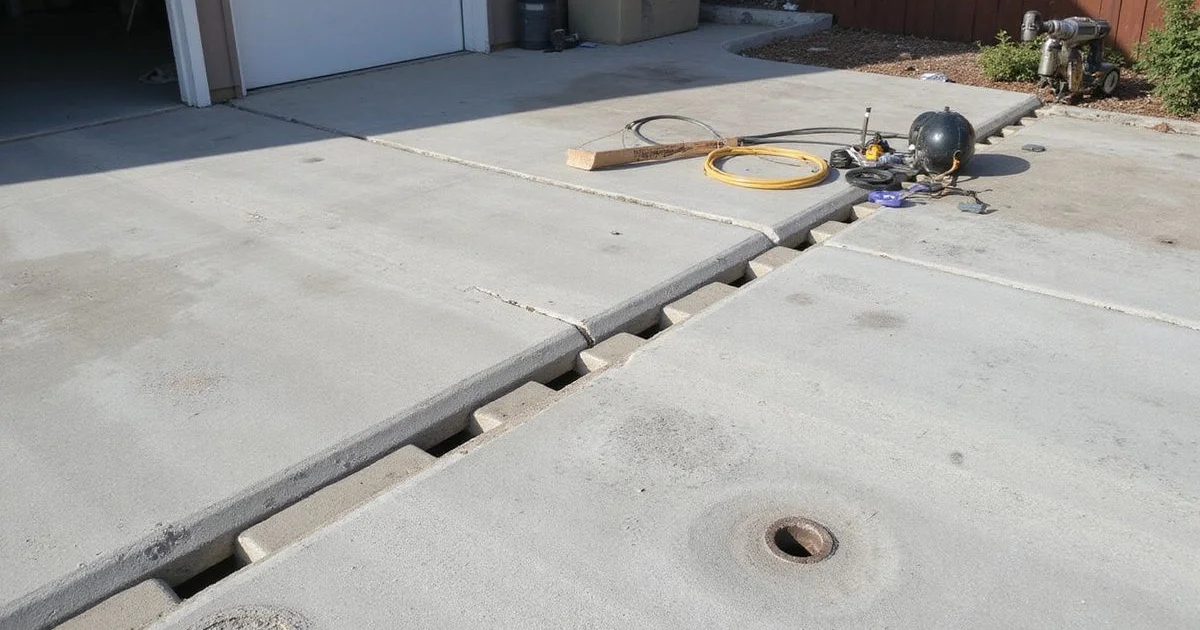
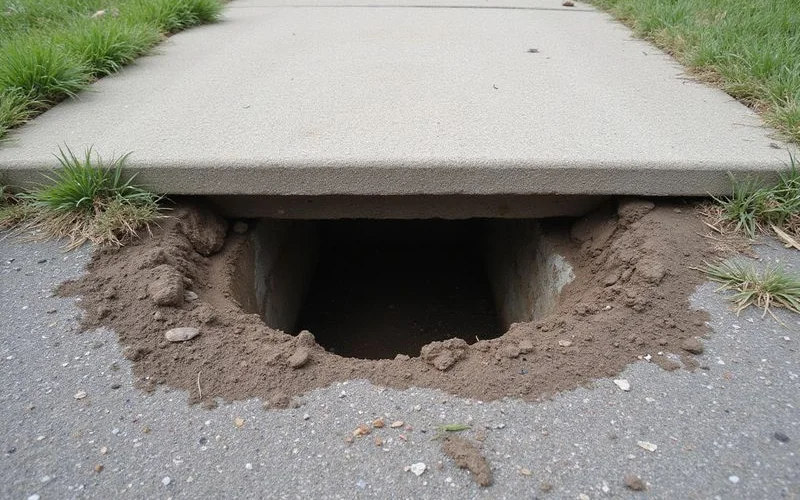
Concrete flatwork sits on prepared ground. When that ground moves, erodes, or consolidates, a void opens beneath the panel and the concrete drops into it.
You end up with a driveway panel lower than its neighbor at the joint, a sidewalk with a lip that catches a toe, or a patio that has tilted back toward the house — which is worse than untidy, because it now directs water at your foundation.
Levelling raises the panel back to position by filling the void beneath it.
How the process works
Assess the panel. Thickness, condition, cracking, and what is likely underneath. Not everything should be lifted.
Drill ports. Small holes are drilled through the concrete at intervals across the area being raised.
Inject. A two-part closed-cell polyurethane polymer is pumped through a port. It reacts and expands beneath the slab, first filling the void and then developing enough pressure to lift.
Monitor the lift. Height is watched continuously as material goes in, and injection moves between ports to control where the panel rises. The goal is a controlled, even lift, not a fast one.
Stop at target. Including — importantly — checking the resulting slope rather than only the joint height.
Patch the ports. Filled with a cementitious material. They remain slightly visible up close on most surfaces.
Why the material suits the job
Closed-cell polyurethane has three relevant properties.
It is light. The subgrade beneath a settled panel has already demonstrated it cannot carry what was there. Adding a heavy fill material risks repeating the failure; foam adds very little weight.
It expands. A small injected volume fills a large void, which is what allows the work to happen through small ports rather than by excavating.
It cures fast. Usable strength develops quickly, so the surface returns to service the same day in most cases.
What qualifies, and what does not
| Good candidate | Poor candidate |
|---|---|
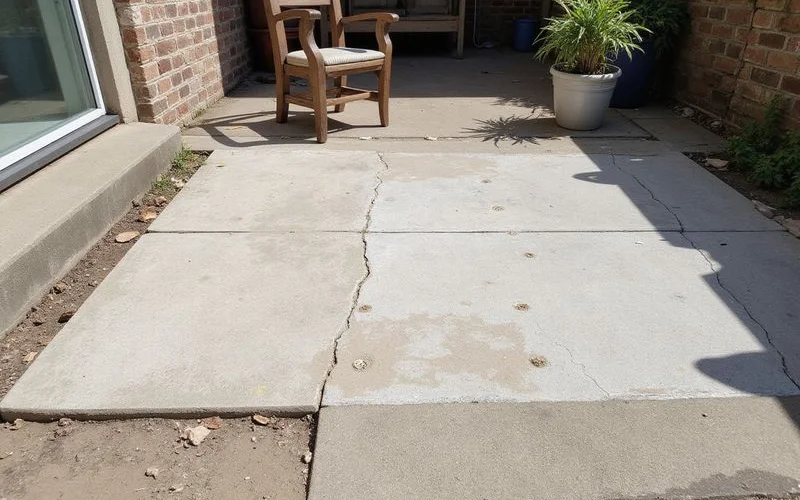
| Panel settled largely as a unit | Broken into multiple pieces |
| Minimal cracking | Extensive cracking through the panel |
| Adequate thickness | Unusually thin concrete |
| Surface otherwise sound | Heavily spalled or deteriorating |
| Subgrade cause resolved or resolvable | Active washout not being addressed |
| Remaining service life worth extending | Concrete at the end of its life anyway |
Where a panel falls in the right-hand column, replacement is usually better value, and a contractor who says so is doing you a favor rather than turning down work.
What it will not fix
Your house foundation. Different problem, different work. See concrete leveling for how we keep the two separate.
The cause of the settlement. If water is washing subgrade out from under an edge, lifting the panel buys time. Fixing the water is the actual solution — see drainage solutions.
A cracked panel’s structural condition. Lifting does not repair concrete. See cosmetic crack repair versus structural repair.
Drainage, unless slope is treated as part of the goal. Two flush panels that both fall toward the house have solved the appearance and none of the problem.
What to ask before agreeing
Is my panel a suitable candidate, and why? What is likely to have caused the settlement here? Is that cause still active, and what would address it? What will the port patches look like on this surface? What slope will the finished panel have?
That last question is the one most often skipped, and on a patio next to a house it is the one that matters most.