
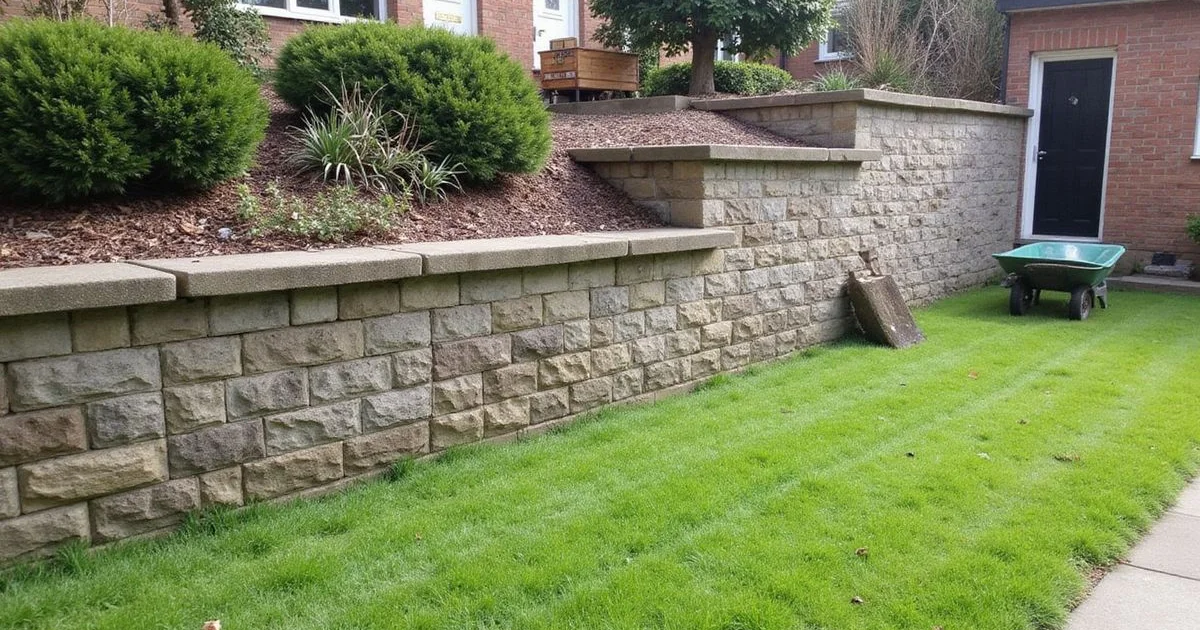
The observations that make retaining wall repair worth assessing, and when waiting is the wrong call.
What a retaining wall is up against
A retaining wall holds back soil that would otherwise slump to its natural angle. That soil pushes horizontally, and how hard depends on soil type, moisture content, the height being retained, and anything sitting on the ground above.
Add water that cannot escape and the loading changes considerably. Saturated soil is heavier, and trapped water exerts hydrostatic pressure on top of the earth pressure. Walls adequate for dry soil can fail when asked to hold soil plus water with nowhere to drain.
That is why most of the useful information about a failing wall is behind it rather than on its face.
The signs, and what each suggests
Leaning or tilting outward at the top. Earth and water pressure exceeding what the wall and footing resist. The clearest single indicator.
Bulging in a section. A localised area pushing out while the ends stay put — often blocked drainage in that section, or inconsistent backfill.
Sliding at the base. The whole wall moving horizontally. A footing and friction problem.
One end dropping. Footing settlement, usually into poorly compacted fill or soil that has lost volume.
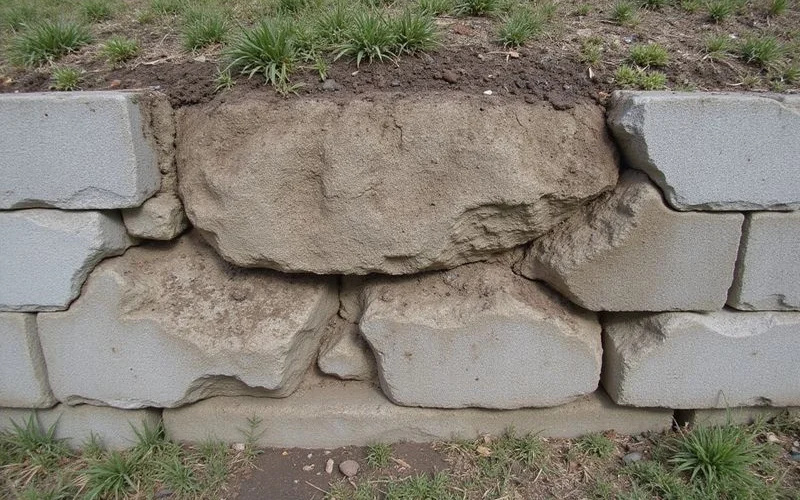
Cracking through units. Cracks running through blocks or stones rather than following joints indicate higher stress than joint separation alone.
Separated or stepped joints. Units moving relative to each other.
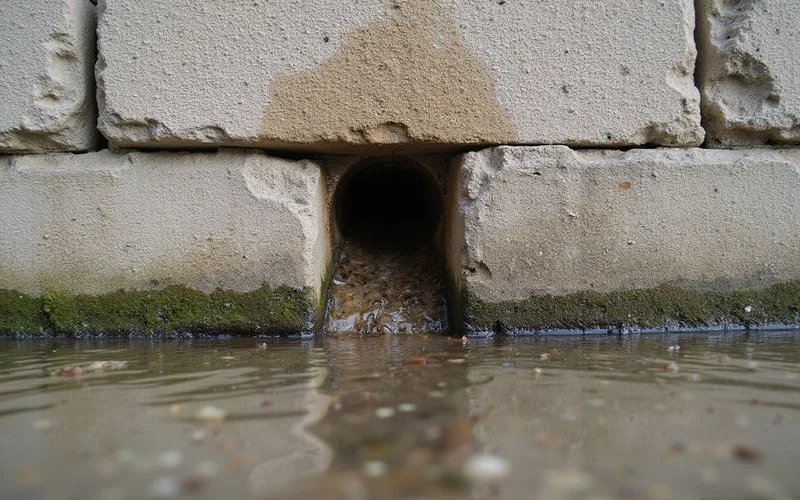
Water seeping or ponding. Water emerging through the face, or standing behind the wall after rain.
Soil slumping at the top. The retained material moving, which changes the loading.
Look behind the wall too
Weep holes. Present? Clear? A blocked weep hole is a cheap fix that may be the whole problem.
What is above. A driveway, patio, parking area, or structure above a wall imposes surcharge load. Walls built to retain a planted bank and later asked to hold up a driveway extension are a recurring story.
Where surface water goes. Does runoff from above concentrate behind the wall? Does a downspout discharge there?
Irrigation. A zone soaking the retained soil keeps it heavier than it needs to be.
How to document it
| What | How |
|---|---|
| Overall geometry | Photograph face-on and along the length from both ends |
| Lean | Level held against the face, photographed |
| Movement over time | Mark the top position against a fixed reference, dated |
| Cracking | Close photographs with something for scale |
| Water | Photograph after rain, note where it emerges or stands |
| Context | What is above the wall, what is below it |
Re-photograph in four to six weeks. As with everything else on this site, change is the most informative evidence available and it costs nothing to collect.
When to act rather than watch
Do not wait and see if:
- The wall is tall and the lean is visible
- Something below it is occupied — a patio, a path, a play area
- Movement has progressed noticeably in a short period
- Cracking runs through units rather than joints
- Water is emerging under pressure
Retaining wall failure can be sudden. Watching a low garden wall lean slightly over two seasons is reasonable; watching a tall wall above a seating area do the same is not.
What happens next
An assessment establishes what is failing and why — geometry, footing, backfill, or drainage — before any approach is proposed. On taller walls, walls carrying surcharge loads, or walls where failure would affect a neighbouring property, engineered design is the right route and we will say so.
See retaining wall repair for the approaches and their limits, and drainage solutions for the water management that is usually part of the answer. If you also want the house itself assessed, that is a separate foundation evaluation.